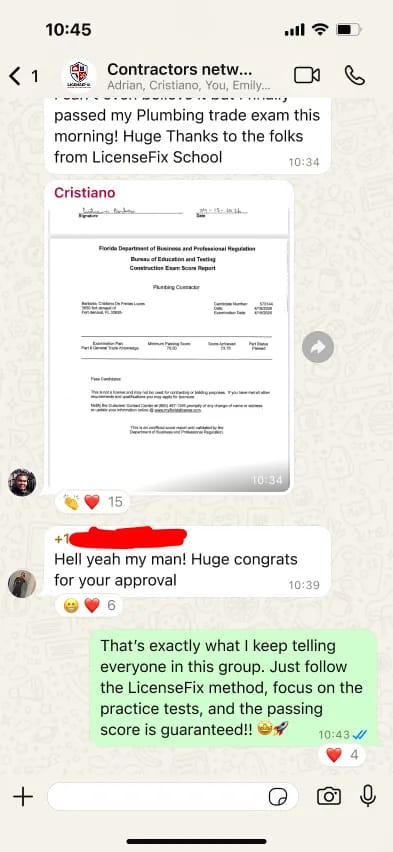

You can sweat a joint, rough in a bathroom, and diagnose a failing water heater in your sleep. None of that matters to the state of Florida until you hold a Florida plumbing contractor license. Without one, you cannot legally pull permits, sign contracts as a plumbing contractor, or bid work above what an unlicensed handyman is allowed to perform. This guide breaks down what the DBPR expects, what the exams cover, and how License Fix gets candidates through the process without wasted study time.
A Florida plumbing contractor license is issued by the Department of Business and Professional Regulation (DBPR) and overseen by the Construction Industry Licensing Board (CILB). Florida offers two paths: a Certified Plumbing Contractor license, which lets you work anywhere in the state, and a Registered Plumbing Contractor license, which limits you to the jurisdiction that issued it. For plumbers who want long-term flexibility and the ability to take on work across county lines, the certified path is almost always the better investment.
A Florida plumbing contractor license is also what allows you to carry your own liability insurance, hire and train your own crew, and bid jobs directly instead of working under someone else's certificate of competency. For a lot of experienced plumbers, that shift from employee to license holder is the real turning point in building a business instead of just holding a job.