License Fix School

Pass Your Florida's Air Conditioning A Exam First Try

Tell us which license you need, we handle the rest. Expert guidance, proven methodology, and comprehensive support.

209+ Students Passed
91% Pass Rate
Since 2022 In Business
EntrepreneurSouth Florida Business JournalBBB A+ RatingOrlando Chamber of CommerceLicense Fix School 5 Star Google ReviewsLicense Fix School 5 Star Yelp Reviews

ALUMNI REVIEWS

Real results from real students.

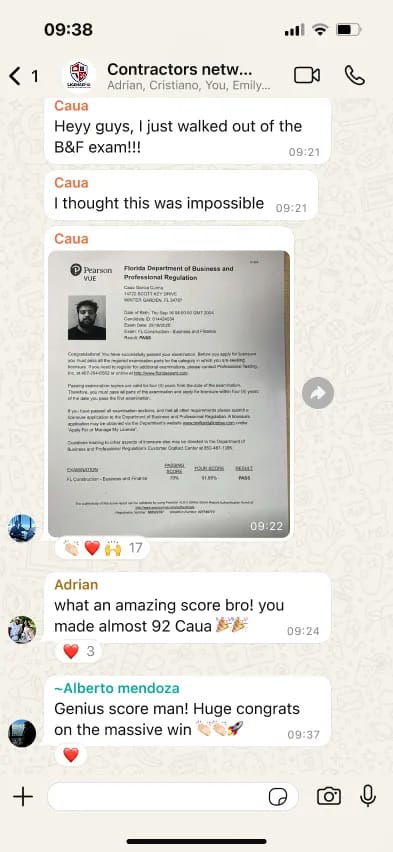
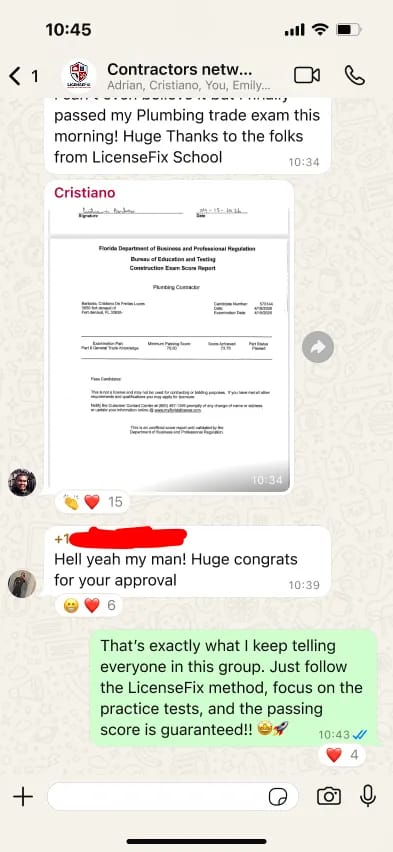
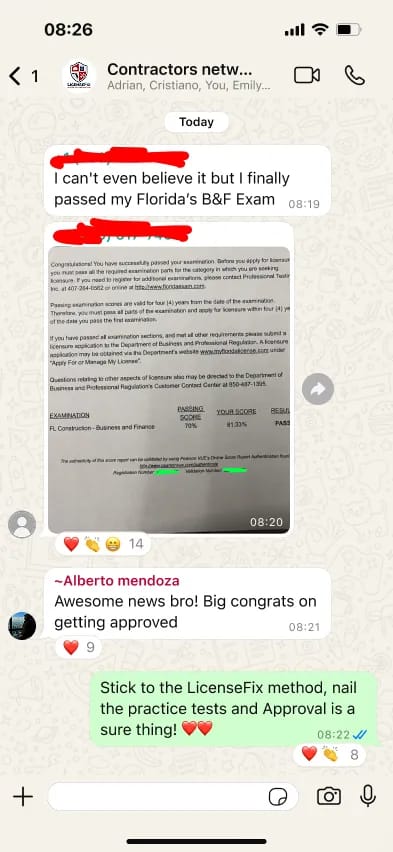
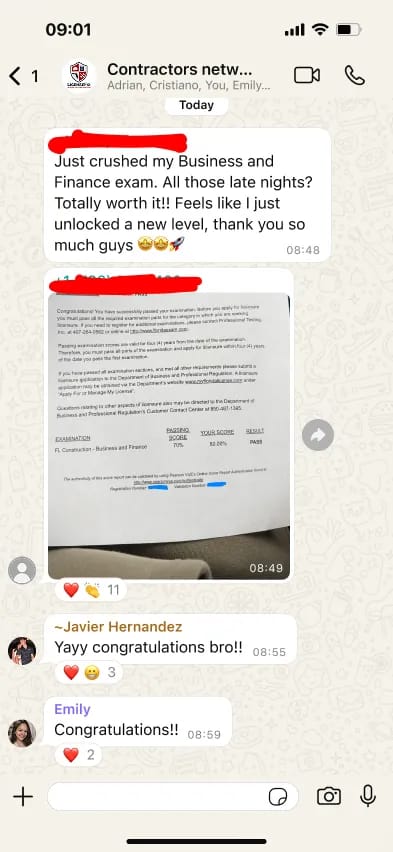
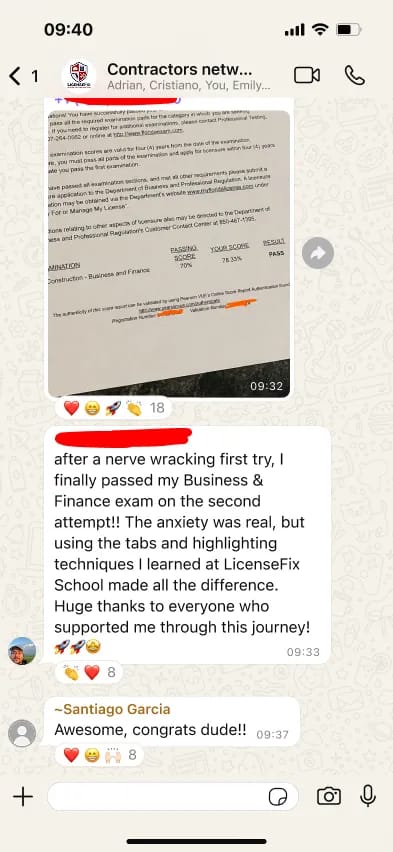
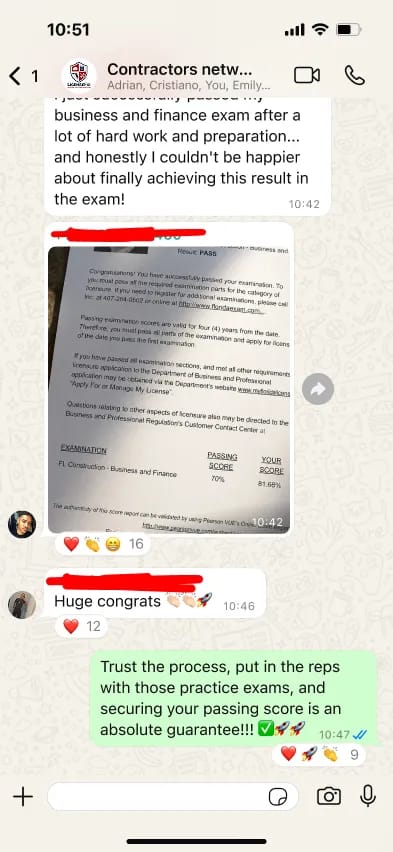
Alumni testimonial - Cauã passed the Business & Finance exam
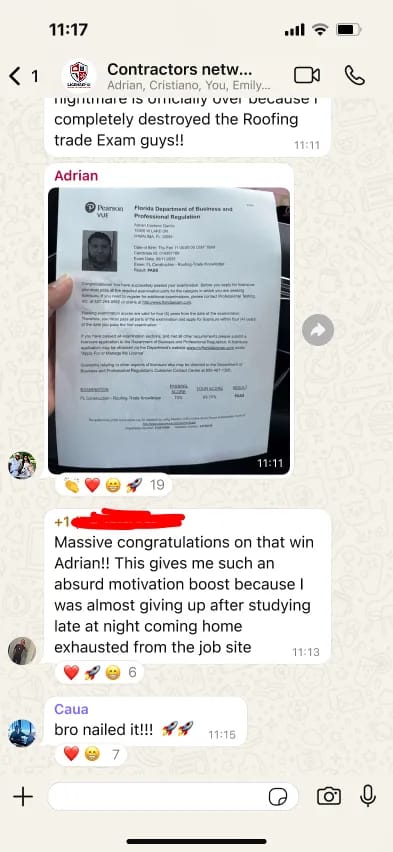
Alumni testimonial - Adrian passed the contractor exam
Alumni testimonial - Cristiano passed the contractor exam
Alumni testimonial - Business & Finance exam success
JOIN THE SUCCESSFUL ONES

What Our Students Are Saying

Watch real video feedback from students who passed their contractor exams using our program.

Google Reviews

What People Say About License Fix

Feedback shared by people who have used our courses and services.

Raff Prezia

in my opinion this is the best general contractor prep school in the state! this guys are amazing. taught me how to highlight, read the questions the right way, tab my books and most important find the answers... their practice exams are amazing, the questions are very similar to the actual exam... the exam history stays on the student portal so you see how you are improving! a special thank you to caua who even during the weekends were there for me. Thank you licensefix school of construction for all the support!!

Google review

reinaldo antonio camargo espina

Best school in florida!! if you are trying to get your contractors license this is the place to prepare!

Javin Nededog

Great way to start taking the next steps to earning a professional license! They made everything simple and easy to understand! Would highly recommend!

Raquel Moreira

Its been a long time since high School and i was scared of going back to School to study… ive realized that studying something you actually want to study is way nicer but thats because licenseFix made the process nice. I went to another school before them and wasn’t able to pass the exam. I was skeptical about this exams but i was wrong! Thank you licenseFix and all the instructors for all the support. The teaching method and the student portal you guys have is Amazing. You guys have the best florida Contractor courses, i will probably study for the roofing exam next year… of course with you guys! My friend is starting classes with you guys next week for the gc exams.

Google review

C. V.

License Fix School of Construction provides an important service for anyone preparing for their contractor licensing exams. They don’t just give you material to study, they teach you how to study, give you the tools and strategies you need to pass, and show you how to quickly find the right information in the books during the open book exams. Having the right preparation and knowing how to navigate the books can make a huge difference when it comes time to take the test.

Google review

Vitor Vasconcelos Inacio

Their practice exams are incredibly helpful and very well put together. You can tell they really understand the exam and know how to prepare you for it.

View on Google
DON'T STUDY ALONE

FOLLOW THE PROVEN SYSTEM CONTRACTORS USE TO GET LICENSED

Step-by-step lessons, practice exams, and a clear study plan designed to help you pass with confidence.

Choose how you want to study

Most Popular

Complete Course

$859

No Books Included

WhatsApp Community with Alumni and Gold Alumni to answer questions + study/network

Full breakdown of every chapter in the Florida Contractor's Manual

The most important content in the Builder's Guide to Accounting

The most important content in the AIA

Best Value

Complete Course + Books + Tabs

$3,369

Books Included

WhatsApp Community with Alumni and Gold Alumni to answer questions + study/network

Full breakdown of every chapter in the Florida Contractor's Manual

The most important content in the Builder's Guide to Accounting

The most important content in the AIA

Got Questions?

Frequently Asked Questions

100% Money-Back Guarantee

Study 100% Pass Guaranteed

Every Air Conditioning A license requires the Business and Finance exam, and that's the one we guarantee. Complete the entire Business and Finance course and dedicate 100% to studying. If you don't pass your Business and Finance exam within 12 months, we'll refund every dollar.

Complete course curriculum
Fail exam within 12 months
Get 100% refund

Florida Class A HVAC Contractor License and Exam Guide

What a Class A HVAC contractor may do in Florida, the two state exams, fees and requirements, checked against official sources. Start your Air A prep.

If you have spent years installing and servicing air conditioning systems in Florida, you already know the trade. What stands between you and working as a certified HVAC contractor under your own license is two open-book state exams and then a license application to the Department of Business and Professional Regulation (DBPR), which issues the license once the Construction Industry Licensing Board (CILB) qualifies you.

This guide covers the Class A air conditioning license: scope, exams, fees and requirements.

Class A air conditioning license key facts

A Class A air conditioning license is the Florida contractor license whose services section 489.105(3)(f) of the Florida Statutes describes as unlimited for central air-conditioning, refrigeration, heating and ventilating systems. A Class A candidate passes two open-book exams, Business and Finance and Air A Trade Knowledge, and then applies to DBPR for the license.

  • Scope: unlimited services. Class B is limited to 25 tons of cooling and 500,000 Btu of heating in any one system.
  • Exams: Business and Finance (120 scored questions, 6.5 hours) and Air A Trade Knowledge (130 scored questions, 7.5 hours), per DBPR's Examinations at a Glance.
  • Passing score: no less than 70% on each test, not rounded.
  • Experience: 4 years, at least 1 as a foreman, or a degree or college-credit route.
  • Credit: FICO-derived score of 660 or higher, or a 14-hour financial responsibility course.
  • Insurance: $100,000 public liability and $25,000 property damage.

    What a Class A air conditioning license lets you do

    Under Florida Statutes 489.105(3)(f), a Class A air-conditioning contractor is a contractor whose services are unlimited in work to install, maintain, repair, fabricate, alter, extend or design central air-conditioning, refrigeration, heating and ventilating systems. The Class A paragraph also covers boiler and unfired pressure vessel systems, pressure and process piping, and pneumatic control piping.

    The same paragraph adds:

    • Duct work in connection with a complete system, when the contractor performs it as necessary to complete an air-distribution system.
    • Limited electrical work: replacing, disconnecting or reconnecting power wiring on the line or load side of the dedicated existing electrical disconnect switch on single phase electrical systems, plus low-voltage HVAC control wiring.
    • Not included: liquefied petroleum or natural gas fuel lines within buildings (except disconnecting or reconnecting changeouts of gas appliances), potable water lines or their connections, sanitary sewer lines, swimming pool piping and filters, and electrical power wiring.

    Class A is a certified license, valid statewide: under section 489.113, a certified contractor only shows the current certificate and pays the local occupational license and building permit fees.

      Class A, Class B and Mechanical compared

      Class A air conditioning, Class B air conditioning and Mechanical are three separate contractor categories in Florida Statutes 489.105(3). Class A and Mechanical services are unlimited, a Class B contractor is limited to 25 tons of cooling and 500,000 Btu of heating in any one system, and Mechanical adds piping work the Class A paragraph does not list.

      LicenseSize limitWhat the statute namesTrade Knowledge exam
      Class A, 489.105(3)(f)Unlimited servicesBoiler and unfired pressure vessel systems, pressure and process piping, pneumatic control piping130 scored questions, 7.5 hours
      Class B, 489.105(3)(g)25 tons of cooling and 500,000 Btu of heating in any one systemPiping and insulation of pipes, vessels and ducts80 scored questions, 5 hours
      Mechanical, 489.105(3)(i)Unlimited servicesAdds lift station equipment and piping and the lines listed below130 scored questions, 7.5 hours

      Boilers, refrigeration and process piping do not separate Mechanical from Class A: the Class A paragraph already names all three. Mechanical adds lift station equipment and piping, gasoline tanks and pump installations with their piping, standpipes, air piping, vacuum line piping, oxygen lines, nitrous oxide piping, ink and chemical lines, fuel transmission lines, and liquefied petroleum and natural gas lines within buildings. For that work, see the Mechanical Contractor course page.

      Class B is not a residential license: its limit is measured per system. If every system you install stays within it, the Class B air conditioning license has a shorter trade exam, and section 489.111 lets an active certified Class B contractor with one year of proven experience in that classification obtain Class A after passing the Class A exam. See also CGC, CBC, or CRC: Which License Fits You.

        How the Class A licensing process works

        The Class A licensing process in Florida starts with the exams, not with a DBPR review. A candidate registers with Professional Testing, Inc., schedules each computer-based test with Pearson VUE, passes Business and Finance and Air A Trade Knowledge, and only then files the license application, where experience, credit and background are checked.

        DBPR's exam application page adds that a passing grade alone does not qualify you for licensure.

        1. Register with Professional Testing, Inc. at floridaexam.com. The only eligibility item DBPR lists for the exam application is being at least 18 years of age.
        2. Schedule each test with Pearson VUE once Professional Testing approves the application.
        3. Pass both tests. You retake only a failed test, attempts are unlimited, and all tests must be passed within four years of the first attempt.
        4. Apply for the license with the certified air conditioning contractor application: form CILB 5-G as an individual, CILB 6-G to qualify a business. DBPR's FAQ says to apply within four years of passing.

          The two exams for a Class A license

          The Class A certification exam has two tests, both open book, multiple choice and computer based. DBPR's Examinations at a Glance lists 120 scored questions in 6.5 hours for Business and Finance and 130 scored questions in 7.5 hours for Air A Trade Knowledge. Rule 61G4-16.001 requires no less than 70% on each test.

          Business and Finance is the same test for Class A, Class B and Mechanical. The board's Chapter 61G4-16 sets its content areas: Establishing the Contracting Business (11%), Managing Administrative Duties (26%), Managing Trade Operations (10%), Conducting Accounting Functions (32%), Managing Human Resources (6%) and Complying with Government Regulations (15%). More in Florida Contractor Exam: Business and Finance.

          Air A Trade Knowledge is weighted by the same rule: Pre-installation (14%), Sheet Metal Ducts (9%), Installation of Refrigeration and HVAC Systems (23%), Installation of Refrigeration and HVAC Equipment and Components (14%), Maintenance Analysis (9%), Maintenance Service (14%), Safety and Equipment (9%), Energy Management (5%) and Indoor Air Quality (3%).

          The exams are offered in Spanish: the Professional Testing instructions say to request the Spanish exam on your application.

            Open-book rules and the Air A reference list

            The Florida HVAC contractor exams are open book within limits set in DBPR's Candidate Information Booklet and reference lists. Reference books may carry only permanently attached tabs with normal chapter or page headings. Underlining and highlighting are allowed, handwritten or typewritten notes and movable tabs such as Post-it Flags are not, and only one copy of each reference is admitted.

            The Business and Finance reference list valid January to December 2026 names Florida Statutes Chapter 455 (2025), Builder's Guide to Accounting (2001), the Contractors Manual (2025 edition from February 1, 2026), and AIA documents A201 (2017), A401 (2017) and A701 (2018).

            The newest Air A trade reference list checked for this guide is the 2024 list (valid January to December 2024). It names:

            • Air Conditioning and Refrigeration Troubleshooting Handbook, 2nd Ed., 2003
            • OSHA 29 CFR Part 1926, July 1, 2023
            • Contractors Manual, 2021
            • Pipefitters Handbook, 3rd Ed., 1967
            • NFPA 90A, 2015; NFPA 90B, 2021; NFPA 96, 2021
            • SMACNA Fibrous Glass Duct Construction Standards, 8th Ed., 2021
            • SMACNA HVAC Duct Construction Standards - Metal and Flexible, 4th Ed., 2020
            • Energy Systems Analysis and Management, 2nd Ed., 2014
            • Refrigeration & Air Conditioning Technology, 9th Ed., 2021
            • Trane Ductulator, 1976 or later
            • Energy Efficient Building Construction in Florida, 2024
            • Florida Building Code - Mechanical, 2023, and Florida Building Code - Energy Conservation, 2023

            That 2024 list also tells candidates to bring an architect's scale. Titles and editions change, so confirm the current Air A list on DBPR's Construction Examinations Reference Lists page before you buy or tab a book.

              Who qualifies for a Class A license in Florida

              To qualify for a certified Class A air conditioning license, Florida Statutes 489.111 requires an applicant to be 18 years of age and of good moral character, with four years of active experience, at least one of them as a foreman, or one of the degree and college-credit combinations listed in the statute.

              The degree route asks for a baccalaureate in the appropriate field of engineering, architecture or building construction (the board's rule names Mechanical Engineering for Class A) plus one year of proven experience in the category. The credit routes combine worker and foreman years with one to three years of accredited college credits.

              The board's Chapter 61G4-15 accepts experience gained under the supervision of a contractor properly licensed in the category applied for, or in one covering its full scope. The Class A application checked for this guide (form CILB 6-G, effective April 2022) lists these experience areas: systems in excess of 25 tons of cooling and 500,000 BTU heating capacity (one year of experience), air conditioning equipment, heating equipment, refrigeration equipment and sheet metal ductwork. Check the current form.

              The same chapter requires a FICO-derived credit score of 660 or higher, or a 14-hour financial responsibility course approved by the Board, and a credit report with no unsatisfied judgments or liens. Insurance is attested by signed affidavit. Section 489.115 accepts an affidavit of workers' compensation coverage, or of an exemption to be obtained within 30 days after the license is issued, and says the board may not deny a license based solely upon a felony conviction.

                Exam and license fees for a Class A candidate

                A Class A candidate pays exam fees to two vendors and a license fee to DBPR. Professional Testing, Inc. charges a $135.00 registration fee, Pearson VUE charges $80.00 for the Business and Finance test, and DBPR application forms effective July 2024 show an initial certification fee of $245 or $145, depending on the filing date.

                The Professional Testing instructions (revised 08/01/2024) charge the $135.00 every time a registration is made for any part of the examination, so a retake means paying it again plus the test fee. Exam fees are non-refundable and non-transferable.

                No figure is given here for the Air A Trade Knowledge test: the DBPR fee sheet and the Professional Testing instructions show different amounts for this 7.5-hour test. Confirm it with Pearson VUE (888-204-6230) when you schedule.

                For the license, DBPR application forms effective July 2024 (checked on forms CILB 5-A and CILB 5-M) print $245 from May 1 of an even year through August 31 of an odd year, and $145 from September 1 of an odd year through April 30 of an even year. Confirm the amount on the current Class A form before you pay.

                  How the License Fix Air A course fits

                  The License Fix Air Conditioning A course is an online exam prep course for the Class A trade knowledge exam, available in English and Spanish. The course is self-paced, with no live sessions or fixed schedule, and most students finish in 4 to 8 weeks, depending on how many hours a week they put in.

                  License Fix courses follow the actual DBPR exam blueprint, so you study what is tested and skip what is not, then practice on timed simulators before exam day. The Complete Course + Books + Tabs plans ship the books and tabs with the full exam prep course.

                  Since 2022, more than 209 License Fix students have passed, and the first-time pass rate is 91%. Those figures are school-wide, not Air A results.

                  The Class A license also requires the Business and Finance exam, and that is the exam License Fix guarantees: complete the entire Business and Finance course, dedicate 100% to studying, and if you do not pass your Business and Finance exam within 12 months of enrollment, you get 100% of your money back.

                  To start, call License Fix School at (321) 333-2825 or use the enrollment options on this page.
                    Frequently asked questions

                    • How long does it take to get a Florida HVAC contractor license?

                      How long a Florida Class A HVAC contractor license takes depends largely on your study pace. Exams are offered daily, and both tests must be passed within four years of the first attempt. Most License Fix students finish the online course in 4 to 8 weeks, depending on weekly study hours.

                    • Is the Florida HVAC contractor exam open book?

                      Yes. DBPR states that all construction examinations are open book and consist of multiple-choice questions, which covers Business and Finance and Air A Trade Knowledge. Only permanently attached tabs are permitted, highlighting is allowed, and handwritten or typewritten notes are not.

                    • What is the difference between a Class A, Class B, and Mechanical Contractor license in Florida?

                      Class A and Mechanical services are unlimited under Florida Statutes 489.105(3), while Class B is limited to 25 tons of cooling and 500,000 Btu of heating in any one system. Class A already names boilers, refrigeration and process piping. Mechanical adds items such as lift station equipment and piping, oxygen lines, and LP and natural gas lines within buildings.

                    • Can I work statewide with a certified HVAC license?

                      Yes. Under Florida Statutes 489.105, a certified contractor may contract in any jurisdiction in the state without fulfilling that jurisdiction's competency requirements, so a certified Class A license works statewide. A registered contractor may contract only in the jurisdictions where registered.

                    • Do I need a Florida HVAC contractor license to work as a subcontractor?

                      Yes. Section 489.113 lets an unlicensed person work under a licensed contractor's supervision only when the work would not require a license under the categories in section 489.105(3)(d) through (o), and air conditioning is one of them. Other contractors must subcontract air-conditioning work unless they hold a certificate or registration in the trade.

                      Reviewed in October 2026 against DBPR, CILB and Florida Statutes Chapter 489.

                    Contact Us Today