

Certified vs Registered Contractor License in Florida
Understand the difference between a certified and registered contractor license in Florida: scope, requirements and which one fits your business goals.

Adrian Coastal Roofing
One of the most common questions contractors face when starting the licensing process in Florida is a simple one: certified or registered? Both give you a valid contractor license in Florida but they work very differently in practice, and choosing the wrong one can limit your business before it even starts.
Your contractor license type determines where you can legally work, how you can expand, and how your credentials are recognized across the state. Understanding the distinction isn't just a technicality, it's a business decision.
In this article, you'll get a clear breakdown of what each contractor license type means, who should choose which, and what the requirements look like for both paths.
What Is a Certified Contractor in Florida?
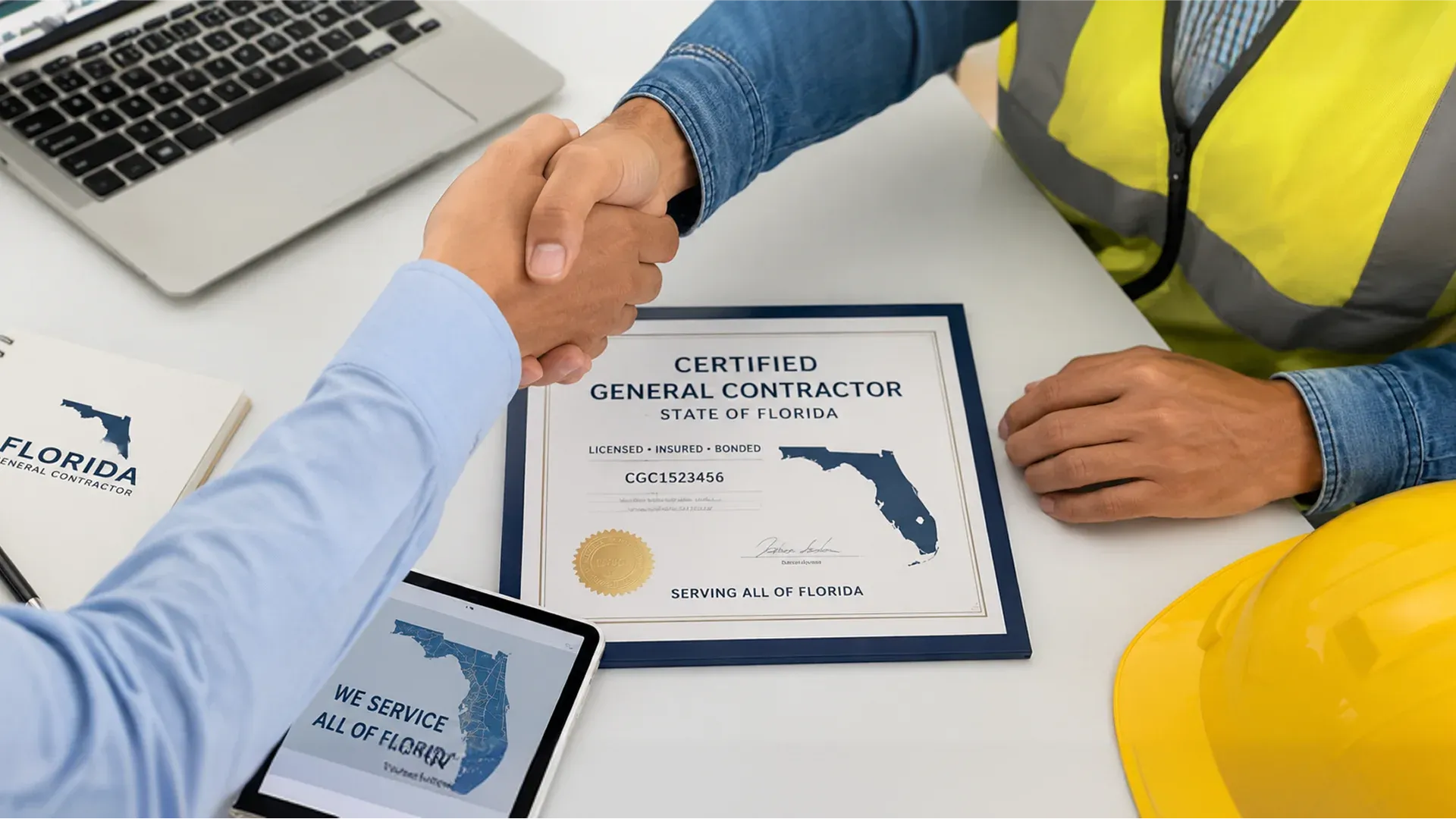
A certified contractor Florida holds a license that is valid statewide, meaning you can take on projects in any county, city, or municipality in Florida without needing additional local approval or registration.
The certified contractor Florida designation is issued by the Florida Department of Business and Professional Regulation (DBPR) after the applicant passes the state examination, meets experience requirements, and submits a complete application. Once issued, the certification follows you wherever you work in Florida.
Benefits of a certified contractor Florida license:
- Statewide mobility, work anywhere in Florida without re-registering
- Higher credibility with clients and general contractors who recognize the state certification
- Easier business expansion into new markets and counties
- Preferred by many commercial clients and government contracts that require statewide licensure
If your business model involves working in multiple counties, bidding on projects statewide, or growing beyond a single local market, the certified contractor Florida path is almost always the right choice. It costs more to obtain upfront, but it pays for itself quickly in professional flexibility.
What Is a Registered Contractor in Florida?
A registered contractor Florida holds a contractor license that is limited to specific local jurisdictions, typically the county or municipality where you register your license.
Rather than passing the state exam, a registered contractor Florida typically passes a local exam approved by the jurisdiction where they intend to work. Once registered, they can operate legally within that area. However, to work in a different county or city, they would need to register separately in each new jurisdiction.
This sounds limiting and for some contractors, it is. But for others, it's a perfectly practical choice:
- If you work exclusively in one area (a single county, for example), a registered contractor Florida license is sufficient
- The local exam may be more accessible than the state exam in some jurisdictions
- Startup costs and administrative requirements may be lower
The trade-off is clear: lower initial barrier, but significant geographic restrictions. A registered contractor Florida cannot simply pick up a project in a new county without additional licensing steps.
Florida Contractor License Requirements: Certified vs. Registered
Both paths lead to a valid Florida contractor license, but the requirements differ in key ways. Here's how they compare:
Florida Contractor License Requirements — Certified
- Minimum 4 years of experience in the trade (with at least 1 year in a supervisory role)
- Pass the Florida State Contractors Exam (Pearson VUE — two parts: Trade Knowledge and Business & Finance)
- Submit proof of experience, insurance, and financial responsibility to the DBPR
- Pay the state application fee (approximately $249 for a Certified General Contractor)
Florida Contractor License Requirements — Registered
- Experience requirements vary by local jurisdiction
- Pass the local exam approved by your county or city (not the state exam)
- Register with each jurisdiction where you want to work
- Pay local registration fees (varies by jurisdiction)
The most important difference in Florida contractor license requirements between the two paths is the exam: the state exam is standardized, more rigorous, and opens statewide access. The local exam is jurisdiction-specific, which means your license is tied to that jurisdiction.
Which Contractor License Is Right for You?
The answer depends on your business goals. Here's a quick decision framework:
Choose Certified if:
- You want to work in more than one county
- You're building a business that may expand statewide
- You're bidding on commercial, government, or multi-site projects
- You want the strongest credential and most recognized contractor license in Florida
Choose Registered if:
- You plan to work exclusively in one local area
- You're testing a new trade or just starting out
- Local exam access makes the process faster in your jurisdiction
- Your current client base is 100% local and is likely to stay that way
Many contractors start with a registered contractor license to get to work faster, then upgrade to a certified license as their business grows. This is a valid strategy but it requires going through the full certification process later, including the state exam.
If you're serious about building a contracting business in Florida, starting with the certified path is almost always the smarter long-term investment. The difference in time and cost is smaller than most people expect, especially with the right preparation.
FAQ — Certified vs. Registered Contractor License
Can I convert a registered contractor license to a certified one in Florida?
Yes, but the conversion is not automatic. You'll need to pass the Florida State Contractors Exam and meet all DBPR requirements for certification. Your experience documentation from your registered license application can often be reused.
Does a certified contractor license cost more than a registered one?
Yes, in most cases. The state application fee for a Certified General Contractor is approximately $249, and you'll need to take the state exam (fees apply). Registered contractor fees vary by jurisdiction and are often lower, but you may pay separately in each jurisdiction where you register.
Which contractor license type is recognized by more clients?
Generally, a certified contractor Florida license carries more weight with clients who are familiar with the licensing system, especially commercial clients, developers, and general contractors managing large projects. The statewide validity and state exam requirement signal a higher standard of qualification.
If I have a contractor license from another state, which Florida license type should I pursue?
Florida does not have full reciprocity with most states. You will likely need to pursue the certified path and pass the Florida State Contractors Exam regardless of your out-of-state license. Some jurisdictions may offer limited recognition, consult the DBPR or a prep school for guidance on your specific situation.
How long does it take to get a certified contractor license vs. a registered one?
The certified path typically takes longer due to the state exam and DBPR review process, often 4 to 9 months from start to finish. The registered path timeline depends on the local jurisdiction but can sometimes be completed in 2 to 4 months.
Conclusion: Choose Your Contractor License With Your Future in Mind
The choice between a certified and registered contractor license in Florida is really a choice about where you want your business to go. Both are valid. Both require real preparation and professional commitment. But only one gives you the freedom to work anywhere in Florida and that freedom has real dollar value.
LicenseFix School helps Florida contractors pass the state exam and complete the DBPR application for a certified contractor license, efficiently, correctly, and with support at every step.
Ready to choose your path and get your contractor license in Florida? Talk to a LicenseFix School (888) 538-1225 advisor today! We'll help you figure out exactly what you need.

About Adrian Coastal Roofing
Adrian is the CEO of Coastal Roofing, a company specializing in roof installation in Florida, recognized for its quality, reliability, and excellence in residential and commercial projects. With years of experience in the construction industry and Florida roofing, Adrian has built his reputation by delivering durable solutions that withstand the state’s extreme weather. Under his leadership, Coastal Roofing has become a leader in roof installation in Florida, offering modern systems such as TPO, PVC, metal roofing, and other efficient solutions to reduce costs and extend the lifespan of roofs.