
Florida Roofing License Books: Full List & Guide
he full list of florida roofing license books, how to tab them, and when to order. Avoid exam-day rejections. Get your list now!

Adrian Coastal Roofing
Walking into your Pearson VUE exam with the wrong reference materials, or the right materials tabbed the wrong way, is one of the most avoidable ways to lose a testing appointment. Getting your Florida roofing license books in order weeks before exam day is not optional prep, it is the foundation everything else is built on.
This guide covers exactly which books you need for the Florida Roofing Contractor exam, how to organize and tab them for speed, and where the most common mistakes happen.
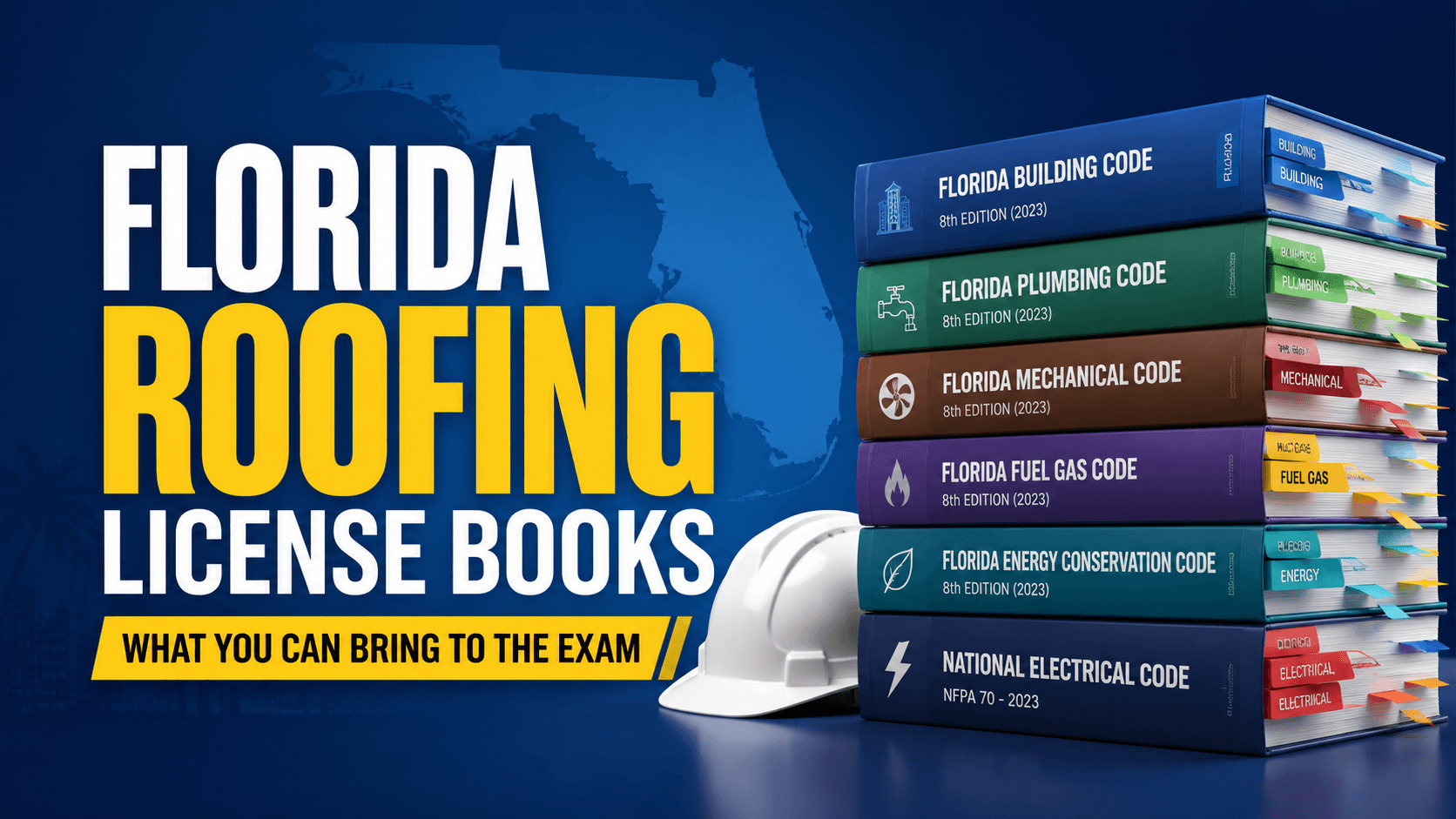
Which Florida Roofing License Books You Actually Need
The state approves a specific list of reference materials for the Roofing Contractor exam, and using an outdated edition or an unapproved substitute can get a book rejected at check-in. Current Florida roofing license books typically include:
- Florida Building Code — Building volume, covering the structural and code requirements relevant to roofing systems
- Florida Building Code — Residential volume, for roofing on one- and two-family dwellings
- A roofing-specific reference manual covering installation standards, materials, and manufacturer specifications commonly tested
- A construction contracts and business law reference, typically drawing from AIA documents, for the Business and Finance section
- A builders' guide to accounting or finance reference, also for the Business and Finance section
Because the trade exam and the Business and Finance exam are both open book, your Florida roofing license books effectively split into two categories: trade-specific code and installation references, and general business references shared with nearly every other Florida contractor license type. Missing either category leaves you unprepared for half the exam.
Always verify the current approved edition directly with Pearson VUE or your exam prep provider before ordering. Florida Building Code volumes update on a cycle, and testing centers strictly enforce which edition of your Florida roofing license books is allowed in the room.
Why Getting Your Florida Roofing License Books Right Matters So Much
It is tempting to treat the book list as a shopping errand rather than part of your actual exam prep, but the two are inseparable. Candidates who show up with the wrong edition of their Florida roofing license books are frequently turned away at check-in and lose their entire testing appointment fee, forcing them to reschedule weeks later and restart their study momentum from scratch.
Beyond avoiding rejection, having the correct Florida roofing license books shapes how effectively you can study in the weeks leading up to your exam. Practice questions and study guides are written against current code editions, so studying from an outdated book creates a mismatch between what you practiced and what the exam actually asks. Getting your Florida roofing license books right from the start removes this risk entirely.
How to Tab and Organize Your Roofing License Books
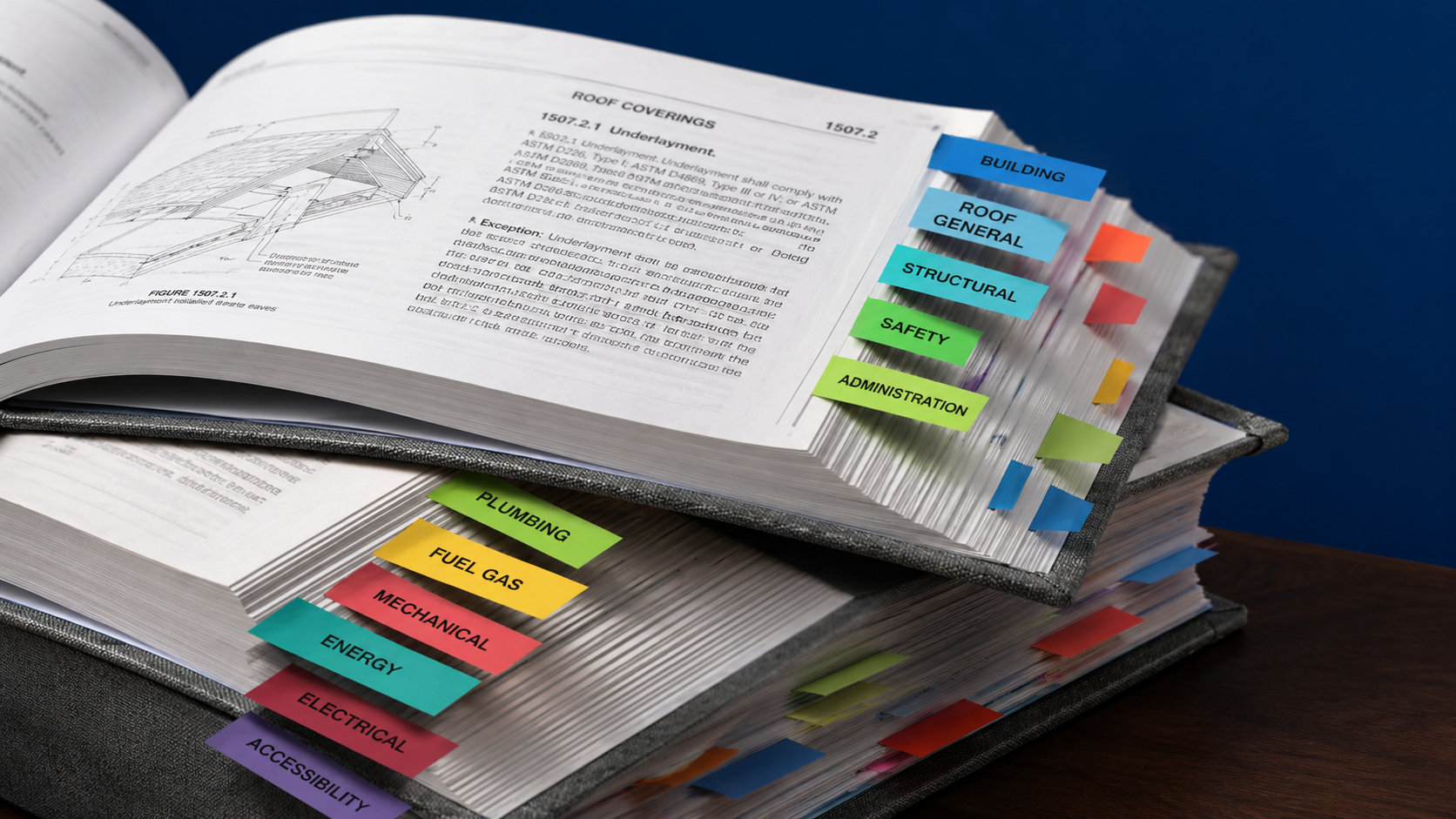
Owning the correct Florida roofing license books only gets you halfway there. An un-tabbed 300-plus page code book is nearly useless under a strict time limit, since flipping through pages during the exam burns minutes you cannot get back.
Effective tabbing follows a few core principles:
- Tab by major topic, not by every subsection. Over-tabbing creates as much confusion as no tabbing at all.
- Use a consistent color system across all your books: one color for code sections, a different color for contract and lien law topics, and another for accounting references.
- Write a short label on each tab, not just a color, so you are not relying on memory alone under exam pressure.
- Practice retrieving information using only your tabs during timed practice exams, not by paging through the full table of contents.
Most Pearson VUE testing centers allow tabs and highlighting but prohibit handwritten notes beyond short topic labels. Confirm the specific rules for your test center before you finalize how you mark up your Florida roofing license books, since violations can mean a book gets pulled at check-in.
When to Order Your Books
Order your Florida roofing license books at least four to six weeks before your scheduled exam date. Vendors occasionally sell out of the current approved edition, particularly during busy testing seasons in spring and fall, and receiving your books late compresses your entire study and tabbing timeline.
Buying used or borrowed Florida roofing license books can work, but only if the edition matches exactly what Pearson VUE currently approves. An outdated Florida Building Code volume, even one edition behind, is one of the most common and entirely preventable reasons candidates get turned away at the testing center. When in doubt, buy new directly from an approved vendor rather than risk a mismatched edition among your Florida roofing license books.
What to Do With Your Books After the Exam
Once you pass, your Florida roofing license books do not become useless. The Florida Building Code volumes and business references you studied remain valuable on-the-job resources, especially in the early months of running a licensed roofing business, when questions about code compliance or contract language come up regularly on real projects.
Some candidates choose to resell their Florida roofing license books once a new edition is released and their current set becomes outdated for future test-takers. If you go this route, be transparent about the edition and condition, and remember that only current, Pearson VUE approved editions have real resale value to future candidates. Holding onto your own set as a working reference, rather than reselling immediately, is often the more practical choice for a newly licensed roofing contractor.
Frequently Asked Questions
How many books do I need for the Florida Roofing Contractor exam?
Most candidates need four to five Florida roofing license books total: one to two Florida Building Code volumes, a roofing trade reference, and one to two business and finance references. Exact requirements can shift slightly with code updates, so confirm the current list before ordering.
Can I write notes in my Florida roofing license books?
Generally, only short tab labels and highlighting are allowed. Full handwritten notes, summaries, or answer keys are typically prohibited and can result in a book being rejected at check-in.
How long does it take to tab Florida roofing license books properly?
Plan for roughly one to two weeks of dedicated tabbing time, done alongside your first read-through of the material, so your tab system reflects where you actually needed to search during initial study.
Where should I buy my Florida roofing license books?
Purchase directly from an approved bookstore or exam prep provider that guarantees the current Pearson VUE approved edition, rather than a general retailer where edition accuracy is not verified.

Final Thoughts
Getting your Florida roofing license books right, the correct current editions, tabbed clearly, and ordered early, removes one of the biggest sources of exam-day stress before you even sit down. Combine well-organized reference materials with a real study plan and timed practice exams, and you walk in prepared instead of scrambling.
Need the exact approved list for your exam date? Check LicenseFix School's Roofing Contractor exam prep course for current book requirements and guided prep.

About Adrian Coastal Roofing
Adrian is the CEO of Coastal Roofing, a company specializing in roof installation in Florida, recognized for its quality, reliability, and excellence in residential and commercial projects. With years of experience in the construction industry and Florida roofing, Adrian has built his reputation by delivering durable solutions that withstand the state’s extreme weather. Under his leadership, Coastal Roofing has become a leader in roof installation in Florida, offering modern systems such as TPO, PVC, metal roofing, and other efficient solutions to reduce costs and extend the lifespan of roofs.