
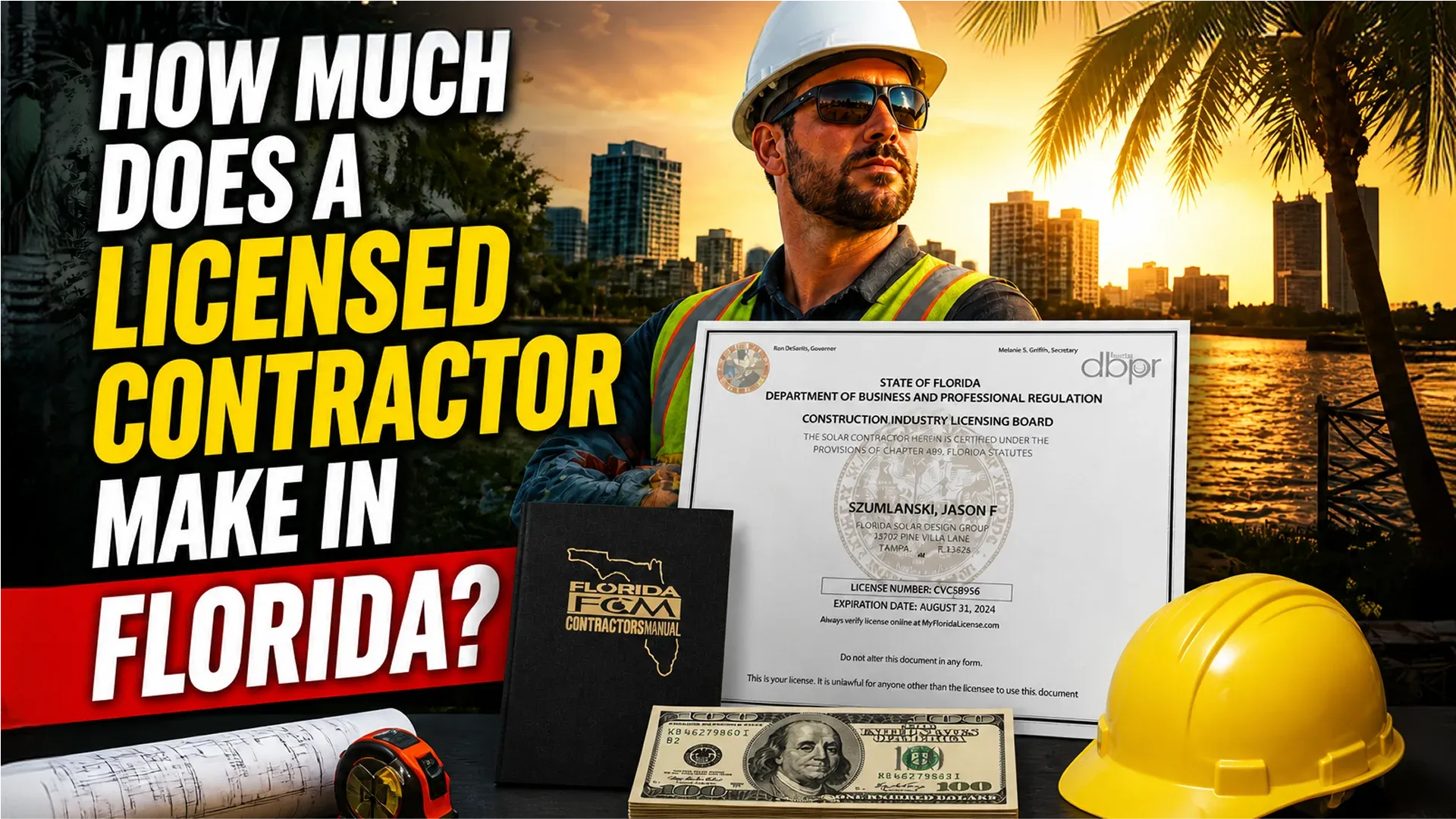
How Much Does a Licensed Contractor Make in Florida?
Curious about contractor salary in Florida? See what licensed contractors actually earn and how getting your license can change your income fast.

Adrian Coastal Roofing
You've spent years doing the work, framing, roofing, electrical rough-ins, finish work. You know what a good job looks like. But you've also noticed that the guy who shows up, signs the permit, and disappears for two hours is making more money than you. A lot more.
That's the contractor salary gap in Florida. And it exists entirely because of a license.
This article breaks down what licensed contractors actually earn in Florida, what changes when you get licensed, and how contractors who own their own business, with the right license, get to a completely different income level.
What Does a Licensed Contractor Earn in Florida?
Let's talk real numbers. Contractor salary in Florida depends on several factors: the license category, whether you work for someone else or run your own business, and where in the state you work.
According to recent data from the U.S. Bureau of Labor Statistics and industry salary reports:
- Licensed general contractors employed by companies in Florida earn between $65,000 and $95,000 per year on average.
- Licensed residential contractors typically earn between $55,000 and $85,000 per year depending on market and volume.
- Construction managers and licensed contractors who run their own business in Florida can earn anywhere from $90,000 to $200,000+ per year, depending on project size and client volume.
The contractor salary in Florida scales dramatically once you remove the ceiling that comes with working without a license or working under someone else's license.
The Real Cost of Not Having a License
Before focusing on what a licensed contractor makes, it helps to understand what you're currently losing if you're working without one.
When you work under another contractor's license, you split value. A common arrangement is that the license holder takes 10–20% of the project just for their signature. On a $100,000 job, that's up to $20,000 that doesn't come to you, for work you planned and executed.
That's not just money. That's your reputation, your relationship with the client, and your ability to grow. A licensed contractor in Florida gets paid in full. The unlicensed one funds someone else's retirement.
The contractor salary gap in Florida between licensed and unlicensed workers doing similar work is real and consistent. Getting licensed is one of the highest-return investments a working contractor can make.
How Becoming a General Contractor in Florida Changes Your Earnings
The jump in contractor salary in Florida is most dramatic when you go from unlicensed or specialty-only work to a full general contractor license in Florida.
As a general contractor, you can:
- Bid on and manage entire projects, not just a trade portion
- Hire and supervise subcontractors, keeping your margin on their labor
- Take on commercial work, retail buildouts, office renovations, multi-unit residential, which pays significantly more than residential-only projects
- Enter into contracts directly with property owners, developers, and municipalities
According to industry data, licensed general contractors who own their own business in Florida typically generate $500,000 to $2,000,000 or more in annual revenue, with net income depending on overhead and project mix. Even in a small operation, the contractor salary picture changes completely with the right license.
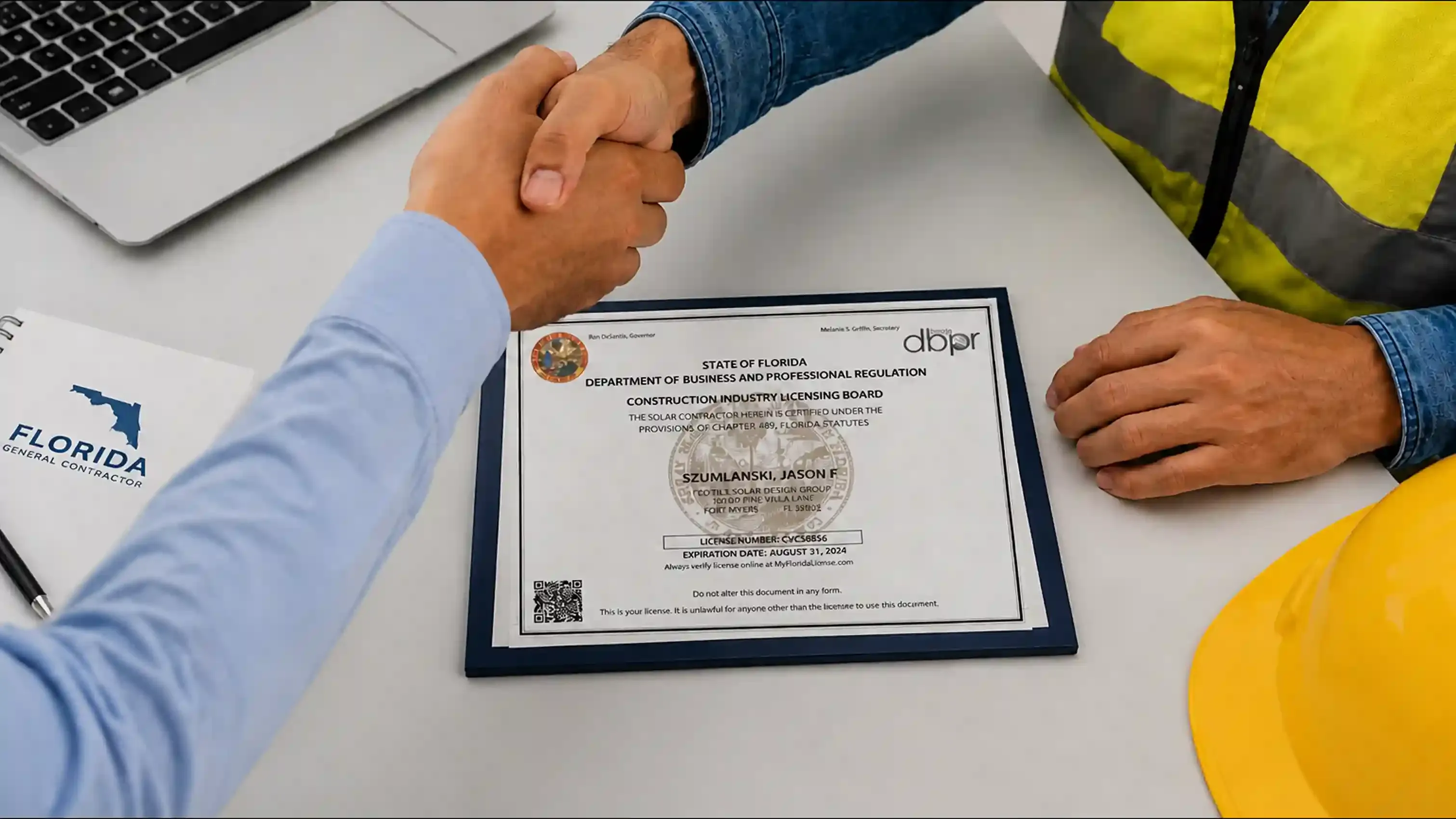
The path to becoming a general contractor in Florida requires 4 years of experience in multi-story commercial construction, passing the state exam, and maintaining insurance and financial requirements. It's a higher bar but so is the income.
Building a Construction Business in Florida: The Income Picture
Many contractors in Florida don't think of themselves as business owners yet, they think of themselves as tradespeople. That shift in mindset is part of what the license creates.
Running a construction business in Florida as a licensed contractor means:
- You can take on projects with contract values of any size (unlike some unlicensed or restricted work)
- You can hire employees and build a team, multiplying your capacity
- You can establish credit lines with suppliers
- You can market directly to developers, real estate investors, and property managers
In high-demand Florida markets, Miami-Dade, Broward, Palm Beach, Tampa Bay, Orlando, a well-run construction business in Florida with the right license is always in demand. Hurricane season alone generates hundreds of millions in restoration work every year, and licensed contractors are the ones positioned to capture it.
The contractor salary in Florida for a licensed business owner isn't just a salary, it becomes a profit structure.
What About Specialty License Holders?
Not every contractor in Florida needs a general license to earn significantly more. Specialty contractor salary in Florida is also strong:
- Licensed roofing contractors in Florida can earn $70,000–$130,000+ per year
- Licensed HVAC contractors typically earn $65,000–$100,000+
- Licensed plumbing contractors fall in a similar range
- Licensed electrical contractors often earn $70,000–$110,000+
Specialty license holders who own their businesses earn at the higher end of those ranges. The pattern holds: a licensed contractor in Florida earns more than an unlicensed one doing the same work.
Frequently Asked Questions
How much does a licensed contractor make in Florida compared to unlicensed?
The contractor salary in Florida for licensed contractors is substantially higher, often 30–60% more on comparable projects. The difference grows larger as project size increases, because larger jobs require a license to even bid.
Does getting a license really increase my income that fast?
For most contractors, yes. The change isn't always immediate, building a client base takes time, but the earning ceiling disappears. Licensed contractors in Florida can take on jobs that were simply unavailable to them before.
Is the general contractor license worth it compared to a specialty license?
Both have strong earning potential. If you're already focused on one trade (roofing, HVAC, plumbing), a specialty license may be the right first step. If you want to manage full projects and run a construction business in Florida across multiple trades, the general contractor license pays off more over time.
What do I need to start earning as a licensed contractor in Florida?
You need your DBPR certification, active general liability insurance, workers' compensation coverage, and the business structure to take on contracts. LicenseFix School helps you understand the licensing pathway so you can start building the business side while you prepare.
The License Is the First Step to the Income You Already Deserve
You already know how to do the work. The license is what lets you charge for it fully, under your own name, without splitting your income with someone who only signed a piece of paper.
Contractor salary in Florida for licensed professionals is strong across all categories. And for those who build their own construction business in Florida, the ceiling goes much higher than a salary ever would.
Ready to take the next step in your construction career? Talk to LicenseFix School and find out which license fits your experience and goals, in English or Spanish.

About Adrian Coastal Roofing
Adrian is the CEO of Coastal Roofing, a company specializing in roof installation in Florida, recognized for its quality, reliability, and excellence in residential and commercial projects. With years of experience in the construction industry and Florida roofing, Adrian has built his reputation by delivering durable solutions that withstand the state’s extreme weather. Under his leadership, Coastal Roofing has become a leader in roof installation in Florida, offering modern systems such as TPO, PVC, metal roofing, and other efficient solutions to reduce costs and extend the lifespan of roofs.