Mistakes That Delay Contractor License Approval in Florida
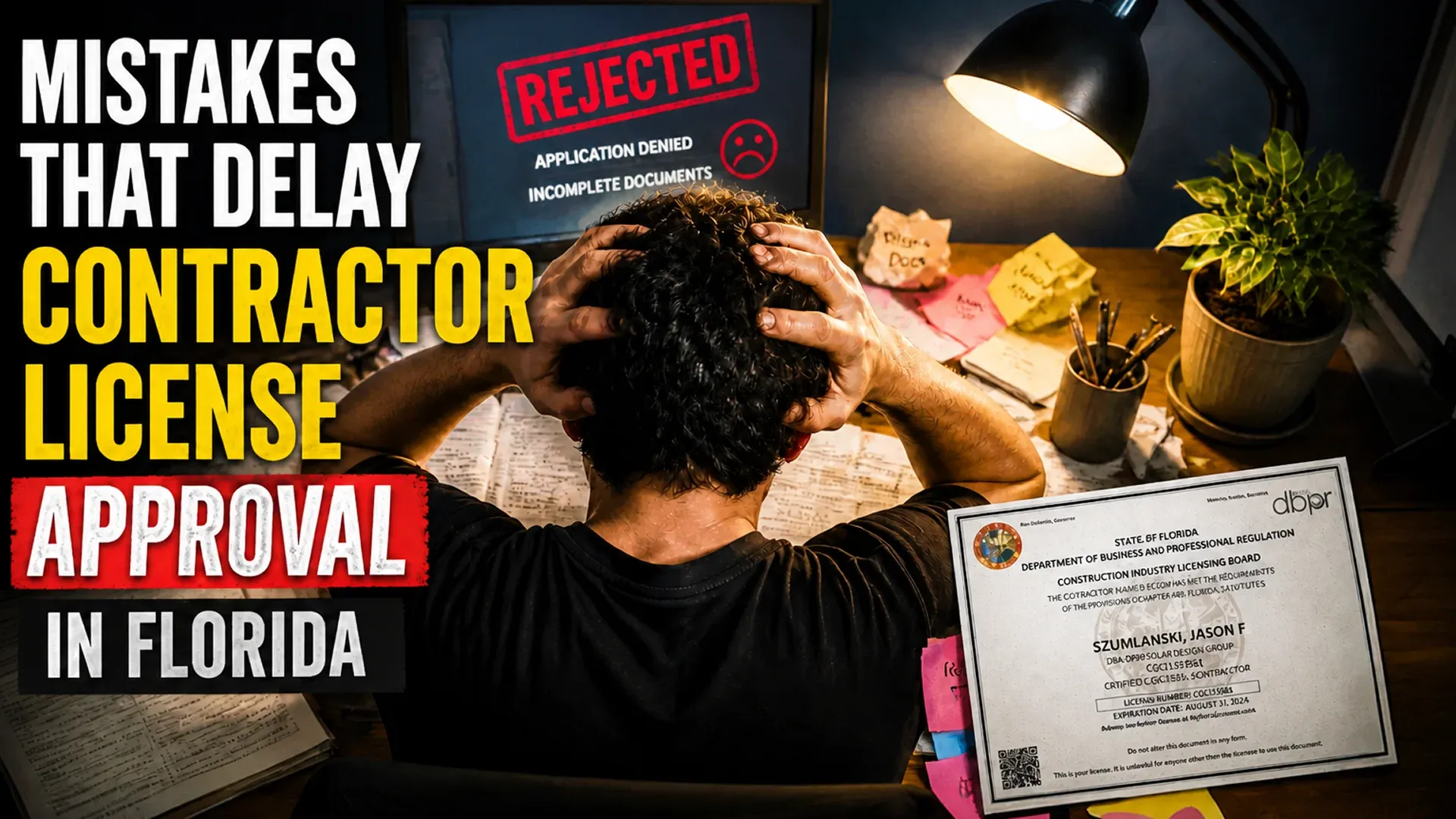
These common mistakes delay contractor license approval in Florida for months. Learn what to avoid so your application doesn't get stuck at the DBPR.

Adrian Coastal Roofing
You've been working in construction for years. You know the trade. You're ready to get licensed. You submit your application and then, nothing. Weeks pass. Then months. Then you get a letter from the DBPR asking for more information, and the process starts over.
This happens more often than it should, and almost always for the same reasons. Understanding the contractor license requirements in Florida before you apply is the difference between getting approved on the first submission and losing six months in a back-and-forth with the state.
Here are the most common mistakes that delay or kill, contractor license applications in Florida, and exactly what to do about each one.
Mistake 1: Submitting Incomplete or Vague Experience Documentation
The contractor license requirements in Florida are specific about how experience is proven. It's not enough to say "I've been doing this for 8 years." The CILB (Construction Industry Licensing Board) needs documentation.
What they accept:
- Signed letters from licensed contractors you've worked under, on company letterhead, specifying the type of work you did, your role, and the dates
- Pay stubs or W-2s that show employment periods
- Project records, contracts, or permits you were involved in
- Employer affidavits confirming your experience as a foreman or skilled worker
What they don't accept:
- Self-described experience without third-party verification
- Letters that are too vague ("He's a good worker and has been in construction for years")
- Documentation that doesn't specify which category of work the experience applies to
The contractor license requirements in Florida demand that your experience be in the specific category you're applying for. Experience doing drywall won't qualify you for a residential contractor application.
Fix it: Before submitting, collect letters from every licensed contractor you've worked under. Be specific: dates, job titles, type of work, project scope. More detail is always better.
Mistake 2: Not Having Insurance in Place Before Applying
This one surprises a lot of applicants. Many people assume they'll get the license first and figure out insurance later. That's not how it works.
The contractor license requirements in Florida include proof of active general liability insurance and workers' compensation coverage (or a valid exemption) as part of the application. You cannot be issued a certified contractor license without them.
The state also reviews your financial responsibility, including net worth documentation. If your net worth documentation doesn't meet the threshold required by your license category, your application will be flagged.
Fix it: Work with an insurance agent who is familiar with contractor licensing in Florida before you apply. Get your general liability policy active, confirm your workers' comp situation, and have the certificates of insurance ready to attach to your application.
Mistake 3: Failing the Exam Because of Poor Preparation
The Florida contractor exam is open book and people still fail it. Not because it's technically impossible, but because "open book" doesn't mean "easy." It means you need to know how to find the right answer in your references, under time pressure.
The contractor license requirements in Florida include passing both parts of the exam with a 70% or higher score on each. Failing even one part means waiting to retake it, paying a reexamination fee, and extending your timeline by weeks or months.
The most common reasons people fail the Florida contractor exam:
- They didn't practice navigating the reference books, they read them, but couldn't find answers quickly in the exam room
- They underestimated the Business and Finance section, which covers contracts, liens, workers' comp, and Florida statutes
- They ran out of time because they were unfamiliar with the format
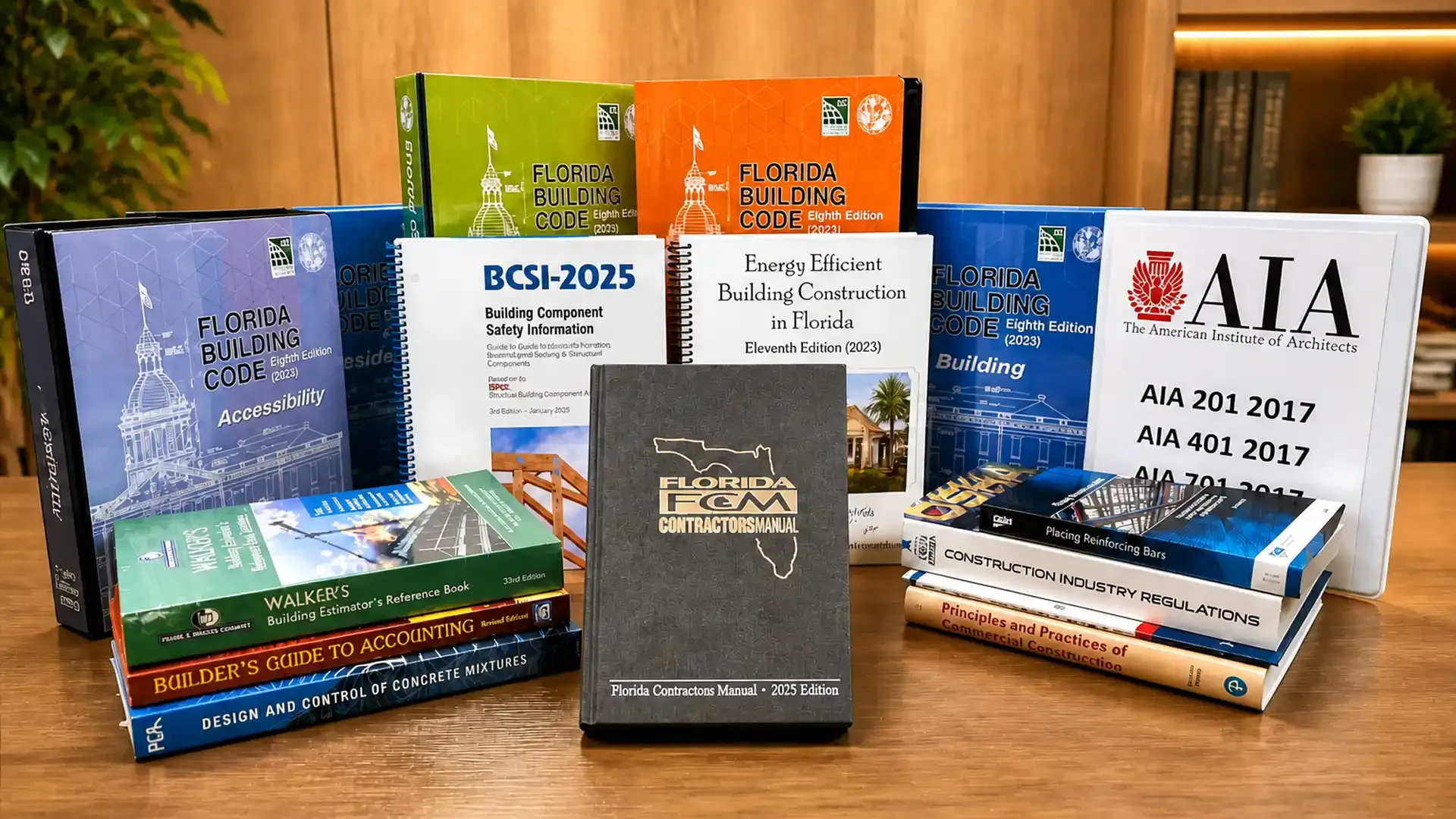
Fix it: Take an exam prep course that specifically trains you on book navigation, time management, and the business and finance content. The technical side is what you know. The business and finance side is often what fails people.
Mistake 4: Background Issues They Didn't Address Upfront
Good moral character is one of the contractor license requirements in Florida. The DBPR runs a background check on every applicant. Depending on what comes up, the board may approve the application, ask for additional documentation, or deny it.
A criminal history doesn't automatically disqualify you but it can delay your application significantly if you haven't addressed it proactively. The CILB looks at the nature of the offense, how long ago it occurred, and what you've done since.
Fix it: If you have any prior convictions or disciplinary history, consult with someone who understands the contractor license requirements in Florida before submitting your application. Addressing it proactively, with documentation of rehabilitation or context, is far better than waiting to see if the board notices.
Mistake 5: Applying for the Wrong License Category
This sounds obvious, but it happens regularly. A contractor who has spent their career doing residential work applies for a general contractor license, which requires commercial experience, including projects at least 4 stories tall and work in specific commercial categories.
Or someone applies for a license category where their documented experience doesn't match what the CILB requires for that classification. The result is rejection or delay while the DBPR requests more information.
The contractor license requirements in Florida differ by category. General contractor, building contractor, residential contractor, roofing, HVAC, plumbing, each has its own experience criteria and exam content.
Fix it: Map your actual experience to the license categories before you apply. If you have mostly residential experience, the residential contractor license may be the right starting point. You can always upgrade to building or general contractor later once you meet those requirements.
Mistake 6: Missing the Financial Responsibility Requirements
Beyond insurance, the contractor license requirements in Florida include demonstrating that you have the financial standing to operate as a licensed contractor. The DBPR requires contractors to meet a net worth threshold appropriate to their license category.
Many applicants don't realize this requirement exists, or they submit financials that don't clearly meet the threshold. This creates a flag in the review process and leads to requests for additional documentation, adding weeks to the timeline.
Fix it: Know the financial responsibility requirements for your specific license category before you apply. If your personal net worth doesn't yet meet the threshold, a business bank account with a clear balance or a surety bond may help satisfy the requirement depending on the category.
Frequently Asked Questions
How long does the contractor license approval process take in Florida?
When the application is complete and all contractor license requirements in Florida are met on the first submission, the DBPR typically processes applications in 60–90 days. Incomplete or flagged applications can add months.
Can a contractor license application in Florida be denied?
Yes. The most common reasons for denial are failing to meet the experience requirements, background issues that aren't addressed, and missing financial responsibility documentation. Denial can be appealed, but it's far better to submit correctly the first time.
What happens if I fail the Florida contractor exam multiple times?
After 3 failed attempts in some categories, the ECLB or CILB may require you to complete additional approved coursework before you're eligible to retake the exam. Your passing scores on individual sections remain valid for 4 years, so if you pass one part, hold onto that.
Is there anything I can do to speed up the DBPR review process?
The most effective step is submitting a complete, accurate, well-documented application from the start. The DBPR processes applications in the order received, and incomplete submissions go to the back of the line when they're returned. Getting it right on submission one is the only real shortcut.
Don't Let a Fixable Mistake Cost You Months
The contractor license requirements in Florida are clear, but only if you know what to look for. Most application delays aren't caused by missing qualifications. They're caused by missing paperwork, wrong categories, failed exams, or insurance gaps that could have been resolved before submission.
Get help preparing for your licensing journey — talk to LicenseFix School. We've walked contractors through this process in English, Spanish, and Portuguese. We know exactly where applications get stuck and how to make sure yours doesn't.

About Adrian Coastal Roofing
Adrian is the CEO of Coastal Roofing, a company specializing in roof installation in Florida, recognized for its quality, reliability, and excellence in residential and commercial projects. With years of experience in the construction industry and Florida roofing, Adrian has built his reputation by delivering durable solutions that withstand the state’s extreme weather. Under his leadership, Coastal Roofing has become a leader in roof installation in Florida, offering modern systems such as TPO, PVC, metal roofing, and other efficient solutions to reduce costs and extend the lifespan of roofs.