
Unlicensed Contracting in Florida: Penalties
Learn the real penalties for unlicensed contracting in Florida, from fines to felony charges, and find out when a license is actually required.

Adrian Coastal Roofing
Hiring a friend with a truck full of tools, or working a side job without a license, might seem harmless. It is not. Unlicensed contracting Florida penalty rules are written into state law, and both the contractor and the homeowner can end up paying for it. Florida treats unlicensed contracting Florida penalty cases seriously enough to involve criminal charges, not just a slap on the wrist.
This guide breaks down what counts as construction work without a license in Florida, what an unlicensed contractor fine actually looks like, whether handyman jobs are exempt, and what the Florida statute on unlicensed contracting really says, so you understand the full unlicensed contracting Florida penalty picture before you take on your next job.
Construction Work Without a License in Florida
Florida defines a contractor broadly. If you are paid to construct, repair, alter, remodel, add to, or improve a building or structure, you are doing construction work without a license in Florida unless you hold a valid state certificate or registration. This applies to general contracting as well as specialty trades like roofing, electrical, and plumbing, and it is exactly the kind of construction work without a license in Florida that triggers an unlicensed contracting Florida penalty if it gets reported.
It does not matter if you only do construction work without a license in Florida occasionally, or call it a side hustle instead of a business. The DBPR does not care about the label, and an unlicensed contracting Florida penalty can apply just the same either way. If Chapter 489 covers the work and you lack the license, you are exposed. Even a local business tax receipt will not protect you from an unlicensed contracting Florida penalty either.
There is one narrow exception. A subcontractor who is not licensed can still legally do construction work without a license in Florida, as long as they work under the direct supervision of a certified or registered contractor whose license covers that scope of work. The supervising contractor carries full responsibility for the result, so this is not a workaround for the unlicensed worker, it is a structured arrangement with real accountability attached, and it is one of the few setups that avoids an unlicensed contracting Florida penalty entirely. Outside of that narrow setup, construction work without a license in Florida is treated the same no matter how small the job feels. This risk alone makes the unlicensed contracting Florida penalty real.
Florida Unlicensed Contractor Fine
The numbers behind a Florida unlicensed contractor fine catch a lot of people off guard. A first offense is a first degree misdemeanor under section 489.127, punishable by up to one year in jail, up to twelve months of probation, and a Florida unlicensed contractor fine of up to $1,000. This is the baseline unlicensed contracting Florida penalty most people picture, but it is only the starting point.
A second offense escalates fast. Any repeat violation becomes a third degree felony, with up to five years in prison and a Florida unlicensed contractor fine of up to $5,000. There is also a sharp exception worth knowing about: if the violation happens during a state of emergency declared by the Governor, even a first offense carries the felony level unlicensed contracting Florida penalty automatically. Few expect that number until facing an unlicensed contracting Florida penalty firsthand.
Beyond the criminal Florida unlicensed contractor fine, the DBPR and local licensing boards can issue cease and desist orders to stop unlicensed activity immediately, and administrative fines can follow on top of any court ordered Florida unlicensed contractor fine. Contracts signed by an unlicensed contractor are also unenforceable under section 489.128, and unlicensed contractors lose their right to file a construction lien under section 713.02. In other words, the unlicensed contracting Florida penalty structure hits from several directions at once, not just the criminal side, which is why understanding the full unlicensed contracting Florida penalty picture matters before you take a job.
Do I Need a License to Be a Handyman in Florida
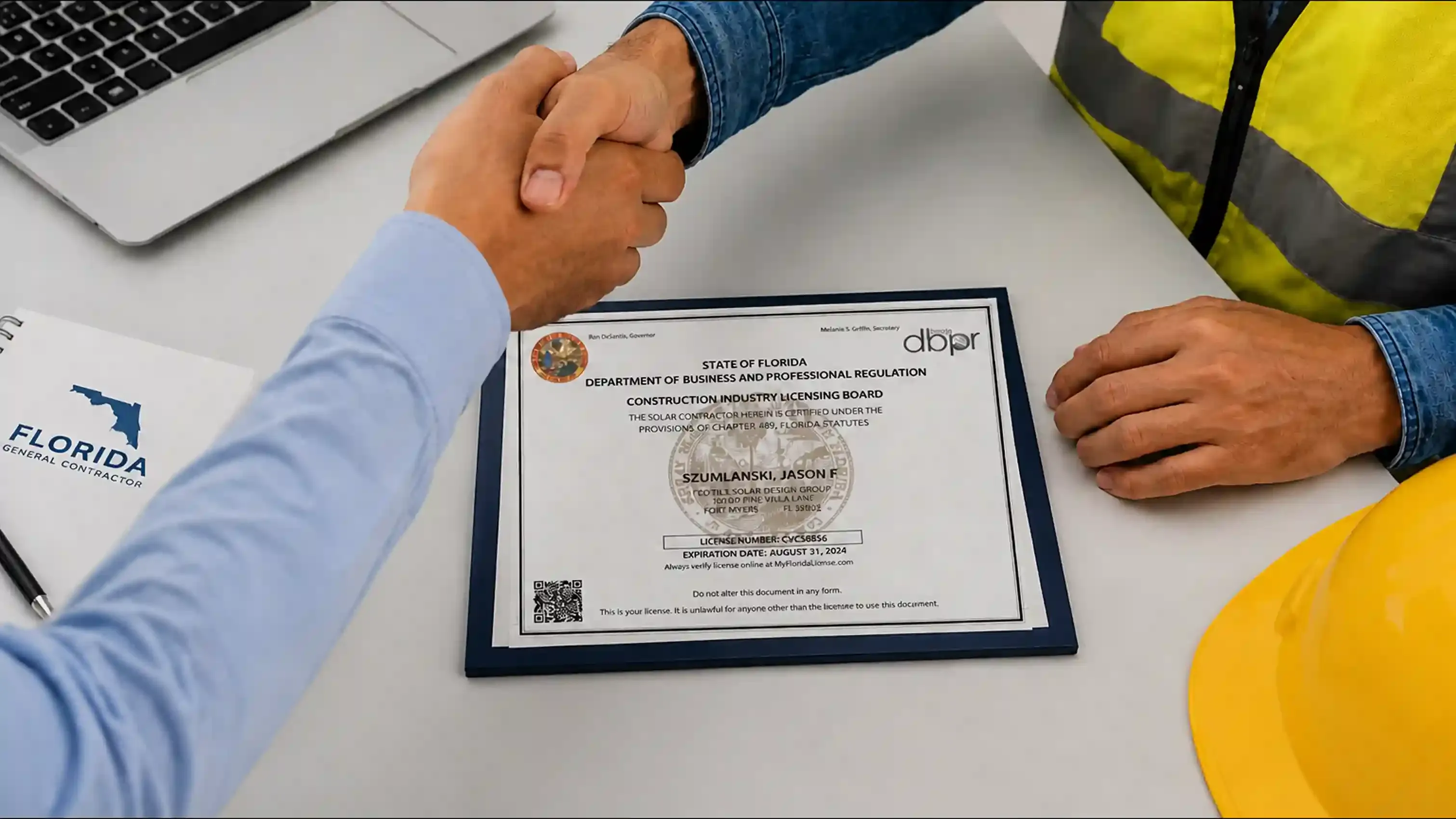
This is one of the most common questions LicenseFix School hears, and the honest answer is, it depends on the job. Anyone asking do I need a license to be a handyman in Florida for quick, casual repairs should know that Florida law allows an exemption for work that is casual or inconsequential in nature, where the total contract price is less than $2,500, as long as you never represent yourself as a licensed or qualified contractor. Step outside that line and an unlicensed contracting Florida penalty becomes a real possibility.
The moment the job grows past that threshold, or involves anything structural, electrical, plumbing, or otherwise covered by a specialty license, the answer to do I need a license to be a handyman in Florida flips to yes, and so does the unlicensed contracting Florida penalty risk. Splitting one job into smaller invoices to dodge the $2,500 limit does not avoid an unlicensed contracting Florida penalty either. That is the core of do I need a license to be a handyman in Florida.
Homeowners working on their own property are covered by a separate owner-builder exemption, but that exemption is for the homeowner themselves, not for someone they hire informally. If you are being paid by someone else to do repair work, asking do I need a license to be a handyman in Florida before you start the job is always the safer move, and a far cheaper one than facing an unlicensed contracting Florida penalty later. When in doubt about do I need a license to be a handyman in Florida, treat the question as a yes until you can confirm otherwise.
Florida Statute Unlicensed Contracting
The Florida statute unlicensed contracting rules sit mainly in Chapter 489, Florida Statutes, with section 489.127 as the core criminal provision. This is the Florida statute unlicensed contracting cases are charged under, and it covers practicing, offering to practice, or simply holding yourself out as a licensed contractor without the credentials to back it up. It is also the section that defines exactly how an unlicensed contracting Florida penalty escalates from misdemeanor to felony.
A related piece of the Florida statute unlicensed contracting framework is section 489.128, which voids contracts entered into by unlicensed contractors, and section 455.228, which lets the DBPR issue stop work orders against unlicensed activity. Together, these sections of the Florida statute unlicensed contracting enforcement relies on cover the criminal, civil, and administrative angles of any unlicensed contracting Florida penalty all at once.
Anyone unsure how the Florida statute unlicensed contracting provisions apply to a specific job, especially borderline handyman or subcontracting situations, should get a clear answer before starting work rather than after a complaint has already been filed and an unlicensed contracting Florida penalty is already on the table. Reading up on the unlicensed contracting Florida penalty rules in advance costs nothing.
Frequently Asked Questions
Is unlicensed contracting a felony in Florida?
A first offense is a misdemeanor. A second offense, or any offense during a declared state of emergency, becomes a third degree felony with up to five years in prison, which is the harshest tier of the unlicensed contracting Florida penalty scale. Knowing this tier of the unlicensed contracting Florida penalty system helps you weigh the real risk.
Can a homeowner be held responsible for hiring an unlicensed contractor?
Homeowners do not usually face criminal charges for hiring an unlicensed contractor, but the contract becomes unenforceable, leaving little recourse if the work is defective. The unlicensed contracting Florida penalty mainly falls on the person doing the work, not the homeowner who hired them.
What is considered unlicensed contracting in Florida?
Performing licensed scope work, such as general construction, roofing, electrical, or plumbing, without holding the matching state certificate or registration, or falsely claiming to be licensed. Any of these can trigger an unlicensed contracting Florida penalty, regardless of how small the job seemed at the start.
Do handymen need a license in Florida?
Only for jobs above $2,500 in total contract price, or for any work covered by a specialty license, such as electrical or plumbing. Smaller, casual jobs can fall under a narrow exemption, but it is easy to misjudge and end up facing an unlicensed contracting Florida penalty anyway.
Conclusion
Unlicensed contracting Florida penalty rules exist to protect consumers and serious contractors alike, and the consequences reach far past a single fine. Between jail time, felony exposure, unenforceable contracts, and lost lien rights, the unlicensed contracting Florida penalty system rarely saves time or money in the long run for the person trying to skip licensure. No business plan survives an unlicensed contracting Florida penalty for long.
If you are ready to make it official, LicenseFix School can walk you through exactly which license you need and how to get there without the guesswork. Reach out to our team, skip the unlicensed contracting Florida penalty risk altogether and get licensed the right way!

About Adrian Coastal Roofing
Adrian is the CEO of Coastal Roofing, a company specializing in roof installation in Florida, recognized for its quality, reliability, and excellence in residential and commercial projects. With years of experience in the construction industry and Florida roofing, Adrian has built his reputation by delivering durable solutions that withstand the state’s extreme weather. Under his leadership, Coastal Roofing has become a leader in roof installation in Florida, offering modern systems such as TPO, PVC, metal roofing, and other efficient solutions to reduce costs and extend the lifespan of roofs.