What It Takes to Become a Roofing Contractor in Florida
Learn how to earn a Florida roofing contractor license, from DBPR eligibility to the CCC exam. License Fix prepares you to pass on the first try.

Adrian Coastal Roofing
Florida has one of the busiest roofing markets in the country, and after every major storm season, demand for licensed roofers spikes even higher. A Florida roofing contractor license is what separates a legitimate roofing business from an operator the DBPR can shut down mid-project. This guide covers what the state requires, what the exam looks like, and how License Fix gets roofers through the process on the first attempt.
The Florida roofing contractor license is issued by the Department of Business and Professional Regulation (DBPR) and overseen by the Construction Industry Licensing Board (CILB). A Certified Roofing Contractor license, identified by a license number beginning with CCC, allows you to work anywhere in the state without additional local registration. A Registered Roofing Contractor license, by contrast, limits you to the specific city or county that issued your local competency certificate. Most roofers building a serious business choose the certified path because it removes that geographic ceiling entirely.
Holding a Florida roofing contractor license also changes how insurers, lenders, and homeowners treat your business. Storm-damage jobs move fast, and a licensed roofer with a valid CCC number can pull permits and start work the same week a competitor without one is still waiting on local paperwork.
Florida Roofing License Requirements
Meeting the Florida roofing license requirements starts with documented experience. The DBPR expects four years of roofing-related work, with at least one year in a foreman or supervisory role where you were responsible for overseeing a crew and ensuring the work met code. A four-year degree in a relevant field, such as building construction or engineering, can substitute for up to three of those four years, though you still need at least one year of hands-on supervisory experience regardless of your education.
Applicants must also be at least 18 years old, pass a background check, and carry the required liability and property damage insurance before the license is activated. Financial responsibility is part of the review as well, since the CILB evaluates your credit history alongside your experience documentation. Incomplete or vague experience letters are one of the most common reasons a Florida roofing license requirements application gets delayed, so it pays to have your employment history documented with specific dates, project names, and a verifier who can confirm your role.
Once your qualifications clear DBPR review, you become eligible to schedule your state exams. Licenses issued under this process must be renewed every two years, with all Florida licenses expiring on August 31 of even years, so mark your calendar well before that deadline arrives.
The Florida Roofing Contractor Exam
Every Certified Roofing Contractor applicant has to pass two computer-based tests, and together they form the Florida roofing contractor exam that decides whether your years of field experience translate into a license. The Business and Finance exam covers contract administration, project cost management, and the financial side of running a licensed roofing company. The Roofing Trade Knowledge exam runs about 80 questions over five hours and focuses on roofing systems, installation methods, safety practices, and the roofing provisions of the Florida Building Code.
Both sections require a minimum score of 70 percent, and if you fail one part, Florida requires a waiting period before you can retake it. You have a set number of years to pass both sections, so a failed attempt is not the end of the road, but it does cost time and additional exam fees that a better-prepared candidate would have avoided.
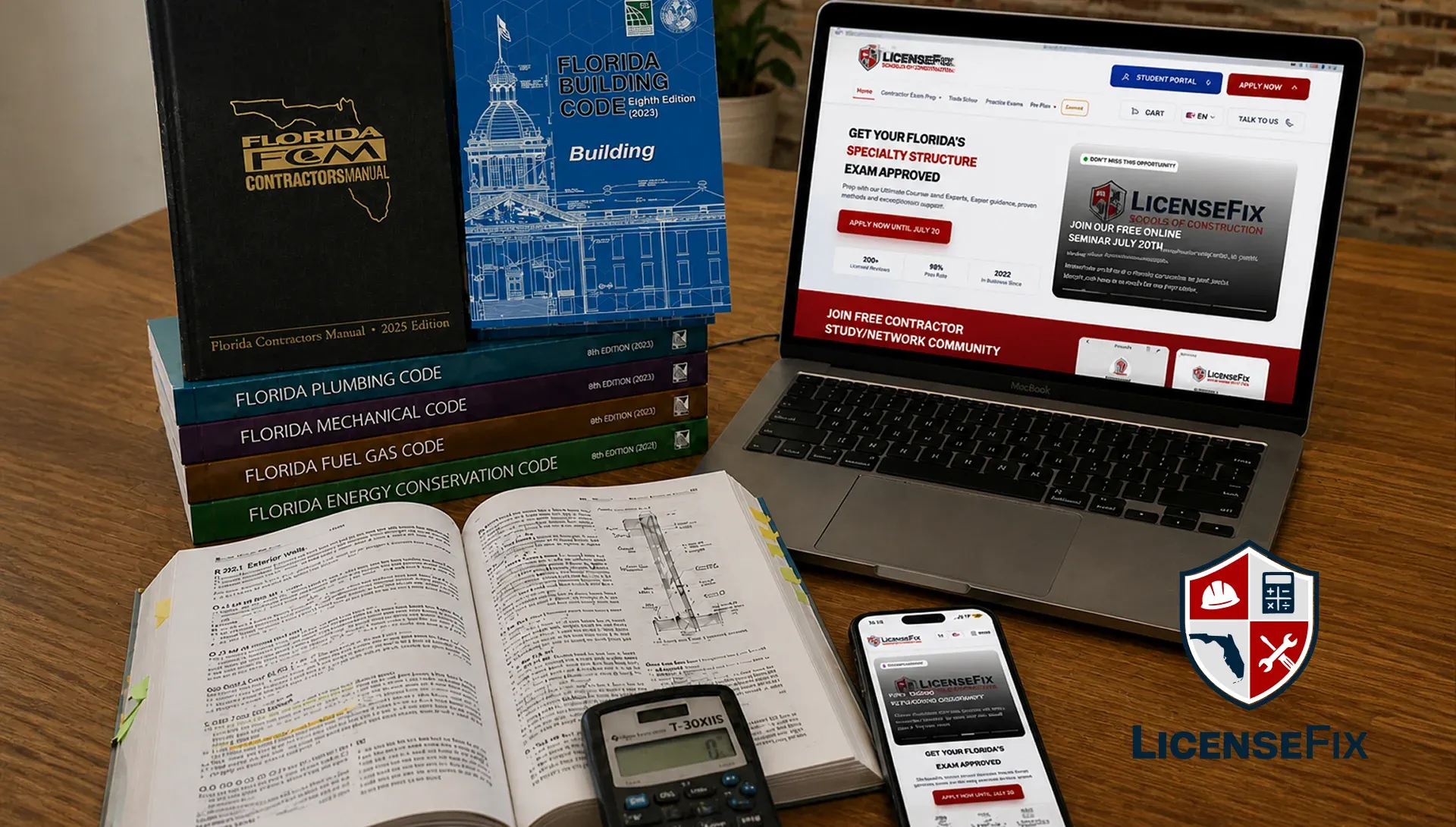
The Florida roofing contractor exam is open book, and that is exactly what makes it deceptive. The Florida Building Code roofing chapters, manufacturer installation guides, and safety references allowed in the exam room run into the hundreds of pages. Roofers who assume they can simply flip to the right section under time pressure typically run out of time before finishing the exam, not because they do not know roofing, but because they never practiced navigating the books at exam speed.
License Fix built its roofing course around that exact gap. Every reference book is tabbed and organized in advance, video lessons cover the Florida Building Code roofing provisions chapter by chapter, and the practice exam bank is refreshed every quarter by Gold Alumni who recently passed the same Florida roofing contractor exam. One of our Gold Alumni built a full roofing company in Florida after passing through this exact program, and he now contributes updated practice questions based on what he saw on his own exam.
For more on how the Business and Finance portion works across every specialty trade, see our guide on the Florida Contractor Exam: Business and Finance. If you are weighing whether roofing or a broader building license fits your goals better, our comparison of CGC, CBC, or CRC: Which License Fits You is a useful next read.
Frequently Asked Questions
How many years of experience do I need for a Florida roofing contractor license?
The DBPR requires four years of roofing-related experience, including at least one year in a supervisory or foreman role. Up to three years of that requirement can be offset by a relevant four-year degree.
What happens if I fail one section of the Florida roofing contractor exam?
You will need to wait a required period before retaking the failed section. Florida gives you a multi-year window to pass both the Business and Finance and Trade Knowledge exams, so one failed attempt does not disqualify you.
Can a registered roofing contractor work anywhere in Florida?
No. A registered license only authorizes work in the specific city or county that issued it. Only a certified license, marked with a CCC number, allows statewide work without additional local registration.
How often do I need to renew a Florida roofing contractor license?
Florida roofing contractor licenses renew every two years, with all licenses expiring on August 31 of even-numbered years.
Do I need a separate roofing license if I already have a general contractor license?
Yes. A general contractor license does not automatically authorize roofing work in Florida. Roofing is regulated as its own specialty category, so a dedicated Florida roofing contractor license is required to legally perform and contract roofing jobs.
Get Your Florida Roofing Contractor License with License Fix
Roofing work does not slow down in Florida, and neither should your path to getting licensed. Between the DBPR paperwork and the density of the Trade Knowledge exam, most roofers who try to study alone end up retaking a section they had the field knowledge to pass the first time. License Fix School has helped more than 209 Florida contractors reach a 91 percent pass rate with courses built specifically around the current roofing exam blueprint.
Call License Fix at (321) 333-2825 or visit our Roofing Contractor course page to start preparing for your Florida roofing contractor license today.

About Adrian Coastal Roofing
Adrian is the CEO of Coastal Roofing, a company specializing in roof installation in Florida, recognized for its quality, reliability, and excellence in residential and commercial projects. With years of experience in the construction industry and Florida roofing, Adrian has built his reputation by delivering durable solutions that withstand the state’s extreme weather. Under his leadership, Coastal Roofing has become a leader in roof installation in Florida, offering modern systems such as TPO, PVC, metal roofing, and other efficient solutions to reduce costs and extend the lifespan of roofs.