
How to Start a Construction Company in Florida
You passed your Florida contractor exam, or you are close to it, and now you are asking the real question. How...
Adrian, Gold AlumniJuly 31, 202610 min read
Topic
Guides for running a Florida construction company after the license. Learn how to qualify a business under your license, which insurance and workers' compensation rules apply and how the construction lien law works.

What does the CILB Business and Finance exam test on lien law? Lien law is not one small chapter on the CILB Business and Finance exam. It i...
You passed your Florida contractor exam, or you are close to it, and now you are asking the real question. How...
You've spent years doing the work, framing, roofing, electrical rough-ins, finish work. You know what a good j...
A license lets you contract; running the company is a separate set of rules. This section is for licensed contractors and candidates who are setting up or growing a Florida construction business, with guides on forming the company, qualifying it under your license, the construction lien law and what the work pays.
If you contract through a corporation, an LLC, a partnership or any name other than your own, the statute requires you to apply as the qualifying agent of that business organization. The qualifier application asks for the business name as registered with the Florida Division of Corporations and its federal employer identification number. A separate certificate of authority has not been required since October 1, 2009. Expect two credit reports, one personal and one for the business, with no unsatisfied judgments or liens against either. The steps to set up a construction company, from registration and LLC setup to costs and insurance takes them in order.
Liability coverage is carried in the name of the licensee: at least $300,000 public liability and $50,000 property damage for general and building contractors, $100,000 and $25,000 for every other category. You also attest to workers' compensation coverage, or to an exemption obtained within 30 days after the license is issued. In construction, the workers' compensation law lets no more than three officers of a corporation elect to be exempt, each owning at least 10% of the stock. The exemption certificate costs $50 and is valid for two years.
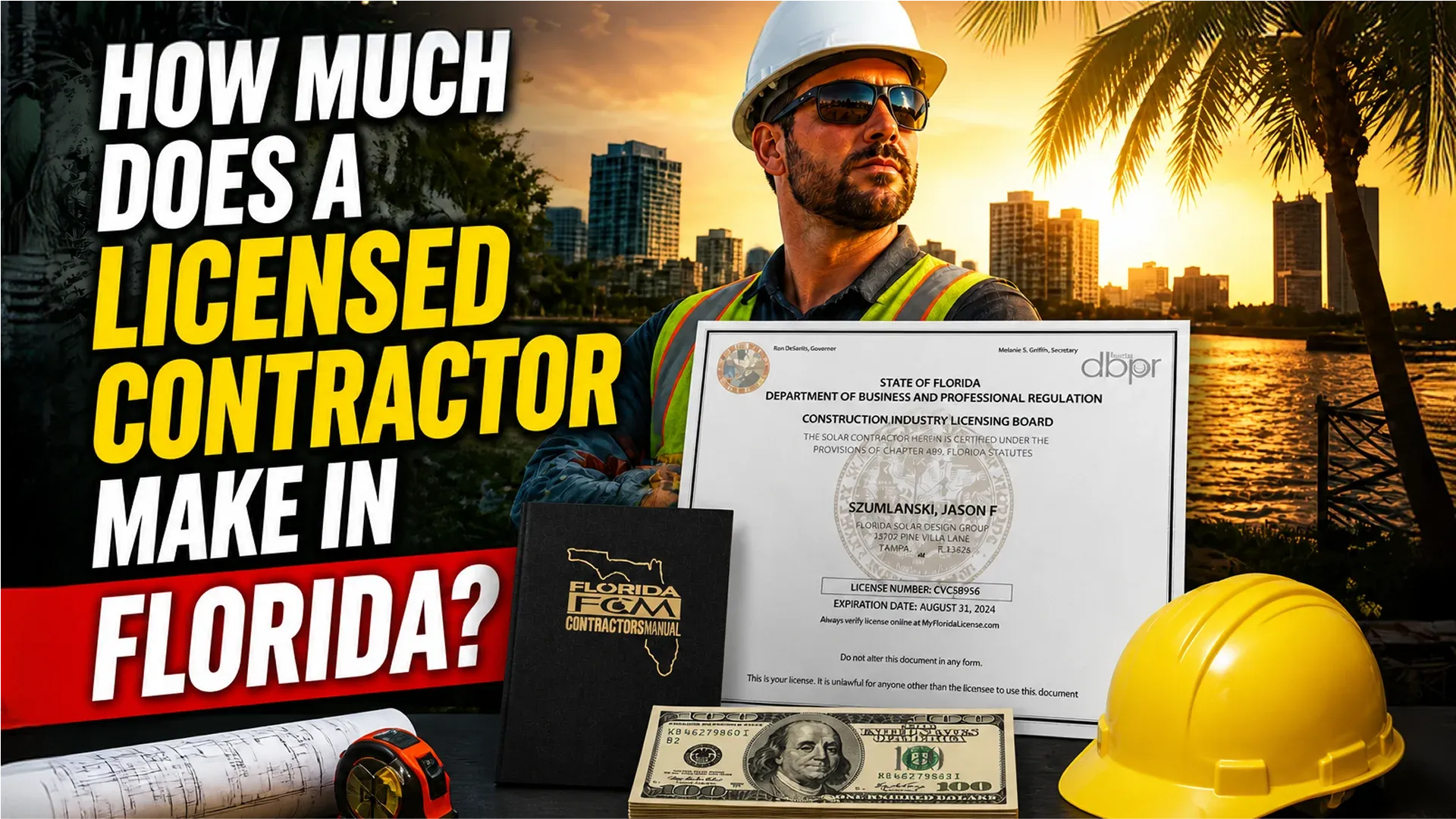
Florida's construction lien law, Chapter 713 of the statutes, is one of the laws named in the Business and Finance exam outline, and it matters long after the exam. Lien law deadlines and documents for contractors sets out the timeline. For the income side, what licensed contractors earn in Florida looks at the pay figures.
The company is licensed through a person. To contract as a corporation, LLC, partnership or under any name other than your own, you apply for certification or registration as the qualifying agent of that business organization. DBPR states that the separate qualified business license, or certificate of authority, has not been required since October 1, 2009.
In the construction industry no more than three officers of a corporation, or of any group of affiliated corporations, may elect to be exempt. Each must be a shareholder owning at least 10% of the stock and be listed as an officer with the Division of Corporations. The exemption certificate costs $50 and is valid for two years.
Yes, when you qualify a business. DBPR's financial responsibility guidance says each applicant must submit a personal credit report and a credit report for the business he or she intends to qualify. The board rule also requires that there be no unsatisfied judgments or liens against the applicant or against the business entity.
The licensing statute treats it seriously. A contractor who loses required workers' compensation coverage must pay an administrative fine of $500, and the lapse is also grounds for the board to revoke, suspend or deny a certificate or registration. Keep the coverage or a valid exemption in place and renew the exemption before it expires.