Out-of-State Contractor? License Fix Has a Faster Path
Contractors licensed in other states often assume that moving to Florida means starting from scratch. That as...
Adrian, Gold AlumniJune 25, 20266 min read
Topic
Licensed in another state and planning to work in Florida? These guides explain endorsement, the reciprocal agreements with three states and the NASCLA exam route, plus what every out-of-state applicant still has to file.
The NASCLA exam is one way to meet the trade exam requirement for a Florida certified general, building or residential contractor license. I...
Contractors licensed in other states often assume that moving to Florida means starting from scratch. That as...
If you already hold a contractor license in another state, Florida contractor license reciprocity might be the...
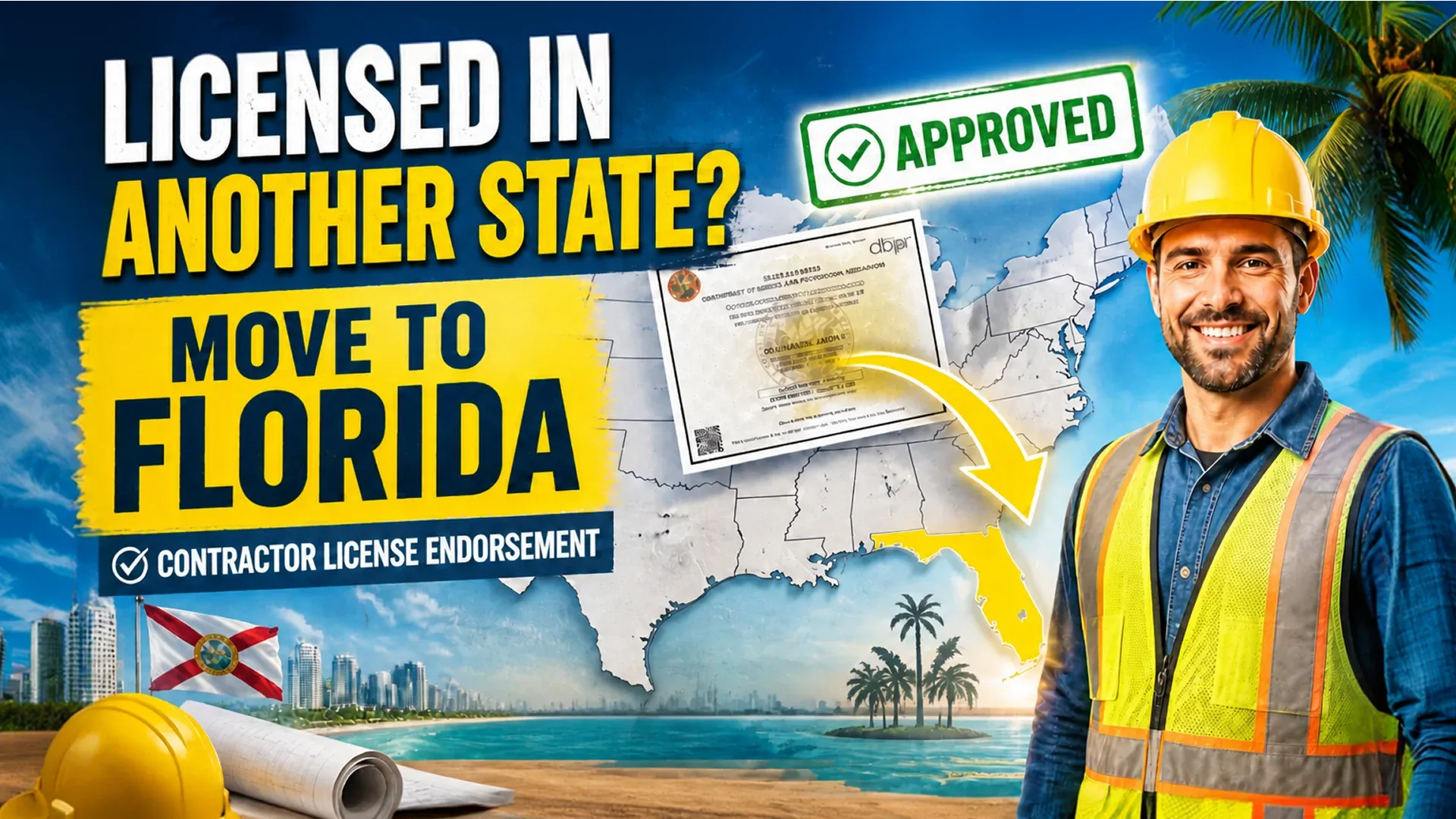
To contract in Florida you need a Florida certificate or registration, whatever license you hold elsewhere. That license can still shorten the route. This section covers endorsement, reciprocal agreements and the NASCLA exam, for contractors moving to Florida or adding it to the states where they already work.
The endorsement section of the statute lists four ways in. You passed a national, regional or state exam that is substantially equivalent to Florida's. You hold a license from a state whose criteria were substantially equivalent to Florida's current ones. You hold a current license from a state that has a reciprocal agreement with the board. Or you have held a valid, current license elsewhere for at least 10 years and apply for the same or similar license while it is active or within two years after it was last active.
On the 10-year route, Division I and roofing contractors also complete a 2-hour Florida Building Code course that includes wind mitigation. DBPR warns that endorsement based on comparing another state's exam is very stringent and rarely approved. How endorsement works for contractors licensed elsewhere walks through the choice.
Reciprocity is used only for certified general, building and residential licenses. The reciprocity application names Louisiana, Mississippi and North Carolina. Applicants must still pass the Florida Business and Finance exam and show a home-state license obtained by examination, with no revocation, suspension or probation in the past five years. Which states have reciprocity and how a license transfer works is covered in its own guide. Trade licenses such as plumbing or roofing are outside these agreements, and the list can change, so confirm it with DBPR before you apply.
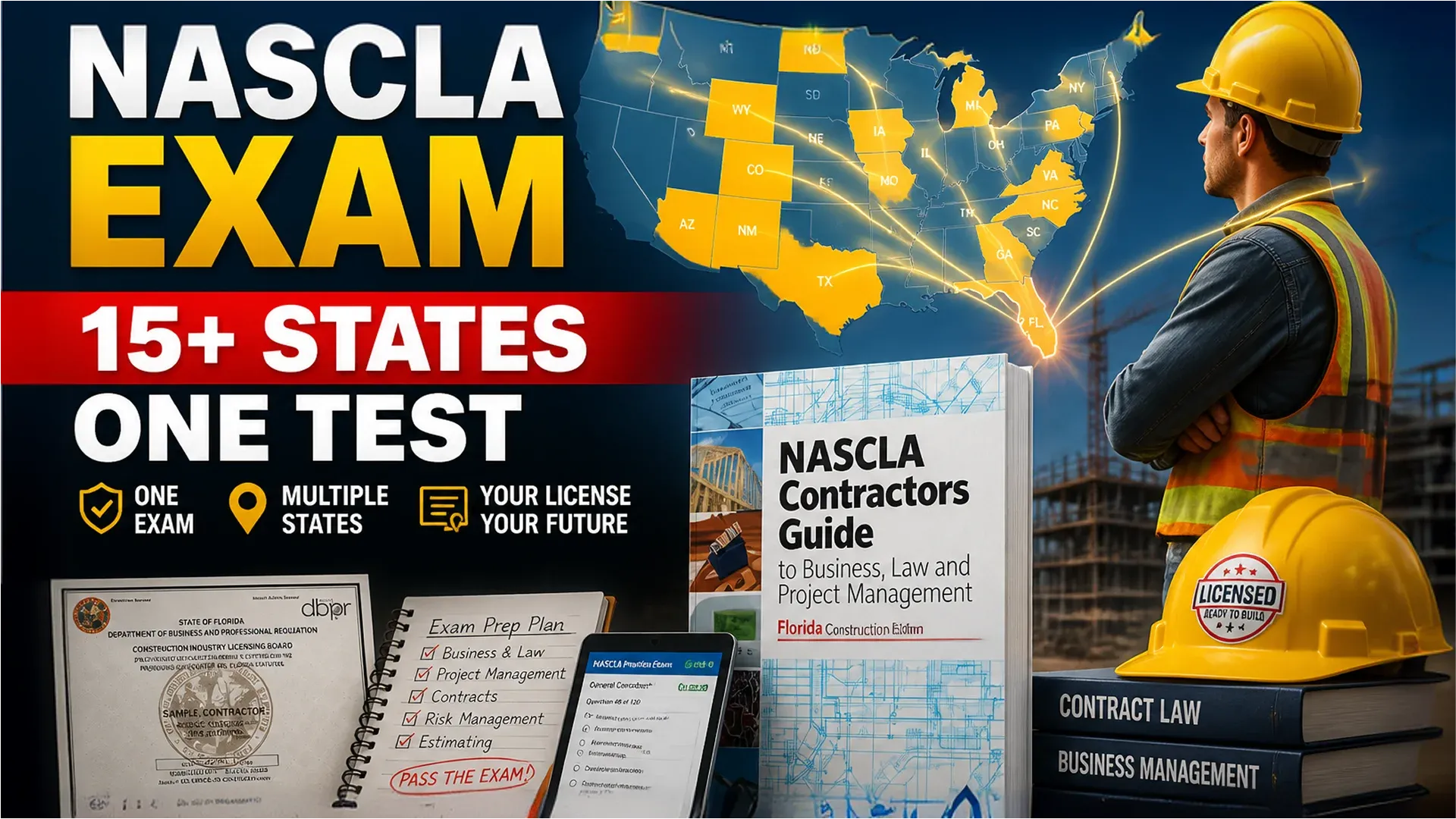
For a certified general, building or residential license, the board rule accepts the NASCLA Commercial General Building Contractors exam. NASCLA's own Florida listing describes it as accepted in lieu of the Florida trade examination. You still pass the Florida Business and Finance exam and a proctored exam on the Florida Building Code. See how the NASCLA exam fits a Florida application.
The endorsement and reciprocity applications each carry a $350 fee. Both require fingerprints and a FICO-based credit report under the same rule as any other applicant: a score of 660 or higher, or a 14-hour financial responsibility course.
The reciprocity application form names three: Louisiana, Mississippi and North Carolina, each for general, building and residential licenses. No agreement covers trade licenses such as plumbing or roofing. Agreements can change, so confirm the current list with the Department of Business and Professional Regulation before you pay the application fee.
It depends on the route. Reciprocity applicants must pass the Florida Business and Finance exam. Applicants using the NASCLA exam must pass Florida Business and Finance and a proctored exam on the Florida Building Code. Division I and roofing contractors on the 10-year route complete a 2-hour Florida Building Code course that covers wind mitigation techniques.
The endorsement application and the reciprocity application each carry a fee of $350. That fee is separate from any exam fees you owe, such as the Business and Finance exam, and from the cost of electronic fingerprints, which each Livescan provider sets and charges directly. Both applications also require a credit report.
The statute lets the board grant a limited, nonrenewable registration for one project to a contractor not domiciled in Florida. DBPR adds that it is good for one year, requires an appearance before the board and is rarely approved. Contractors who plan to keep working in Florida should look at endorsement or the state exams instead.
Experience from outside jurisdictions is accepted toward the category you apply for when it fits Florida's definition of that category. The board accepts experience gained under the supervision of a contractor who was properly licensed at the time in that category or in one that covers its full scope, and the application asks for that contractor's license number.