Can You Get a GC License in Florida With a Degree Instead of Experience?
The short answer is no, a degree does not fully replace experience for a Florida GC license. A four year const...
Topic
How Florida licenses construction contractors, from who needs a license and what certified and registered mean to the penalty for working without one. Start here, then move on to requirements, out-of-state routes or renewal.
Subtopics

Understanding Handyman Work Under Florida Law If you are offering home repair, maintenance, or improvement services in Florida, one of the m...

The short answer is no, a degree does not fully replace experience for a Florida GC license. A four year const...

What are the Florida contractor financial requirements for a GC license? The Construction Industry Licensing B...

Licensefix School of Construction runs live Q&A sessions where Florida contractors ask the same handful of que...

Getting a Florida contractor license is not a single appointment or form. For most applicants, the process inc...

Keeping a contractor credential current in Florida involves more than paying a fee. For many licensees, Florid...

If you are planning to become a licensed contractor in Florida, the first budgeting question is usually simple...

If you've been working in construction in Florida and finally decided it's time to get licensed, there's somet...

Earning a GC license in Florida is a significant achievement, but maintaining it requires ongoing commitment....

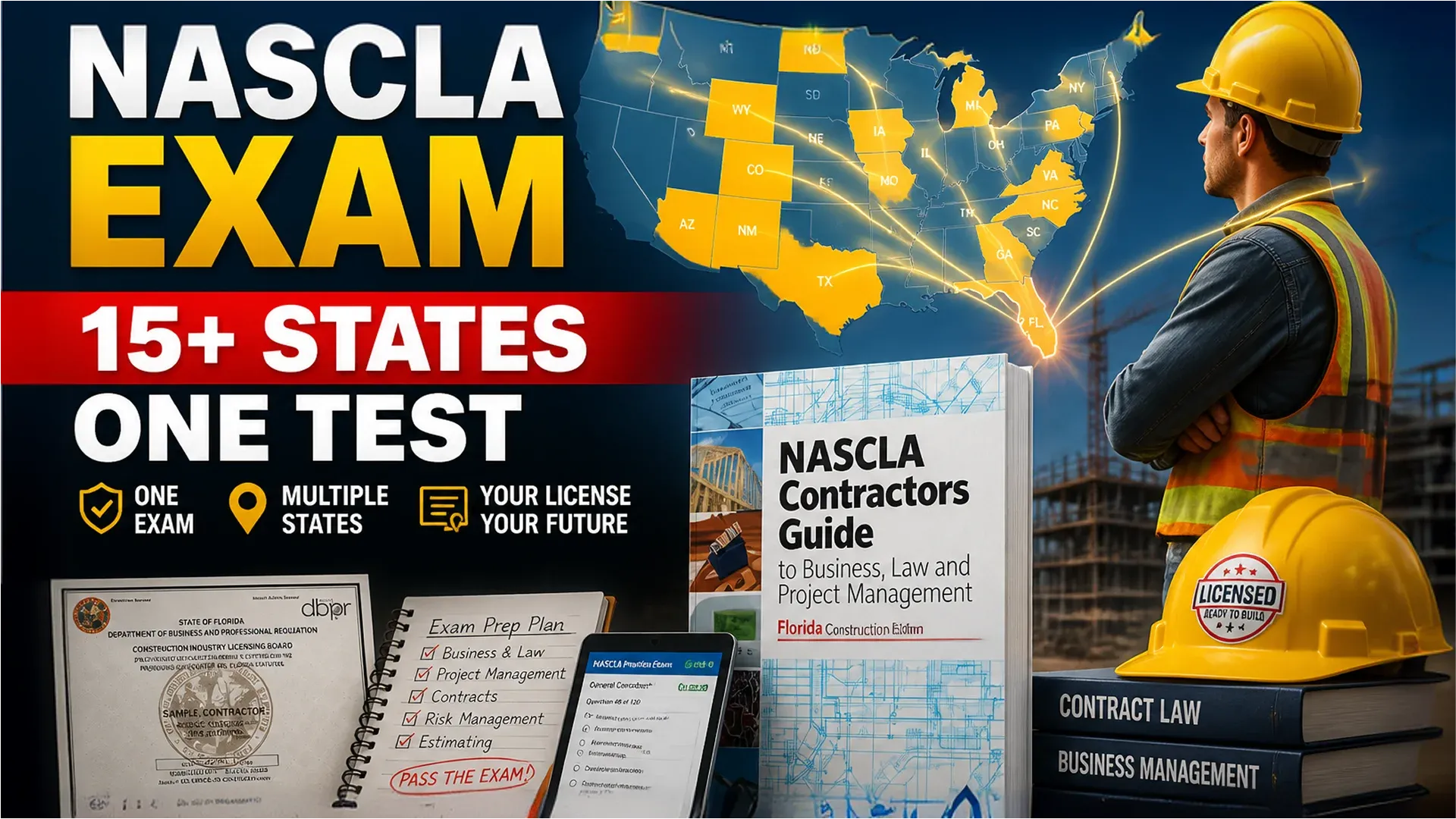
The NASCLA exam is one way to meet the trade exam requirement for a Florida certified general, building or res...
These guides explain how Florida licenses construction contractors: who needs a license, which agency issues it, what separates a certified license from a registered one and what happens to people who contract without either. They are written for tradespeople and business owners who plan to work in Florida and want the rules before the paperwork.
Florida law says no person may engage in the business of contracting without first being certified or registered in the proper classification. The Construction Industry Licensing Board qualifies each applicant and the Department of Business and Professional Regulation issues the license, a split covered in what a DBPR license is and who needs one.
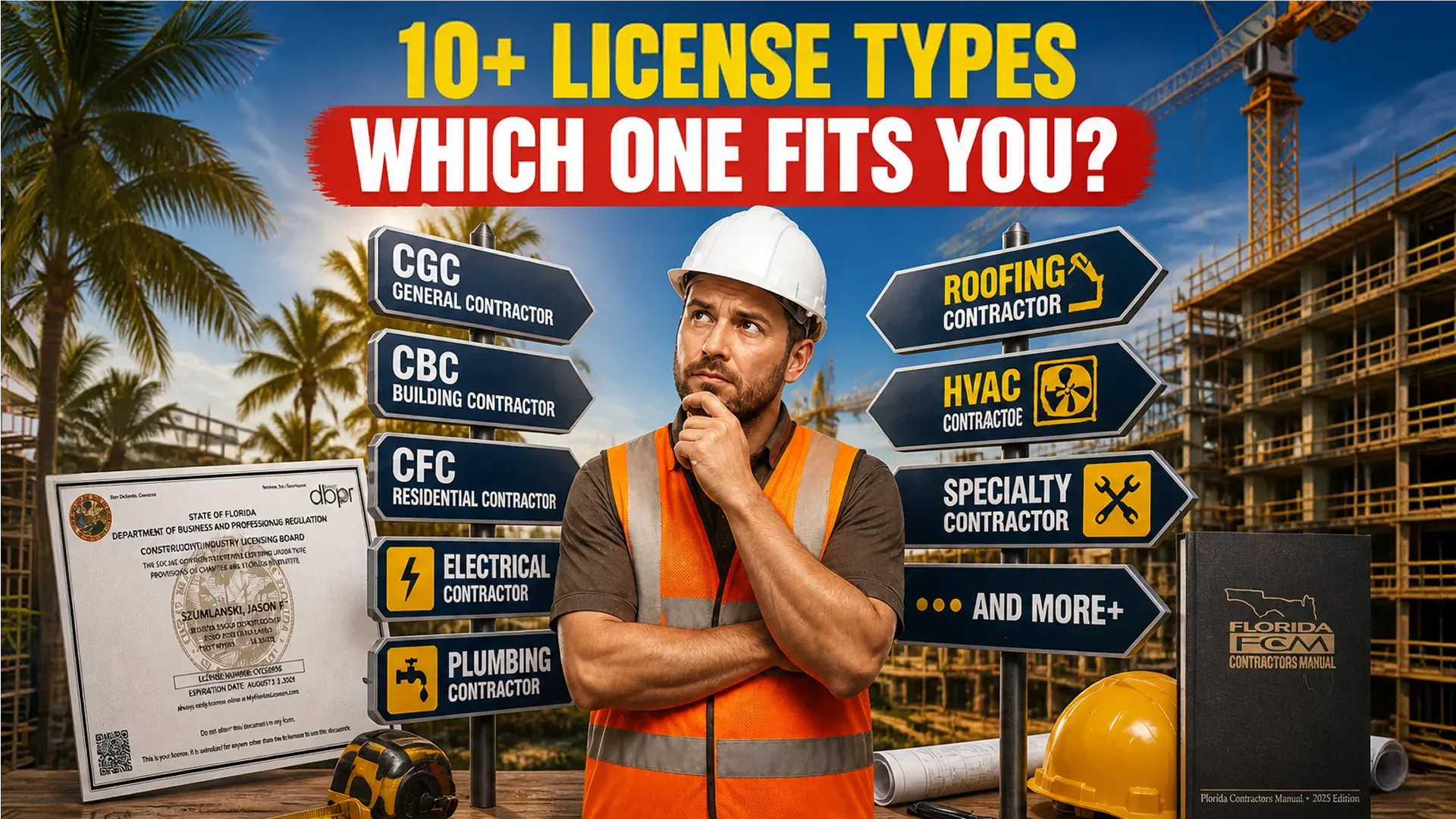
A certified license lets you contract anywhere in the state. A registered license is limited to the cities or counties where you hold a local certificate of competency. Compare them in how certified and registered licenses differ in scope and requirements and in how county and state licensing differ. The statute also splits contractors into Division I (general, building and residential) and Division II (every other category), and the overview of Florida license types shows where your trade falls.
A first violation for unlicensed contracting is a first-degree misdemeanor, and a repeat violation is a third-degree felony. The only dollar-based exemption is for casual, minor or inconsequential work under $2,500 in total contract price, and it does not reach any job that needs a building permit. Read the fines and criminal charges for unlicensed contracting and the answers to common licensing questions for 2026 before you take on a job.
For a certified license the state exams come first and the license application follows. License requirements covers experience, credit, insurance, fingerprints, fees and timing, along with handyman limits, degree routes and rules for applicants who are not citizens; the general contractor requirements checklist is a good first read. Out-of-state and reciprocity explains endorsement, reciprocal agreements and the NASCLA exam, starting with which states have reciprocity with Florida. Renewal and continuing education covers the two-year cycle and the 14 hours of continuing education. License Fix also keeps the whole path on one page in its step-by-step licensing guide.
The Construction Industry Licensing Board, which sits within the Department of Business and Professional Regulation, decides whether an applicant qualifies. The department then issues the certificate or registration once the applicant is qualified and the license fee is paid. The board has 18 members appointed by the Governor.
Before. A candidate for a certified license first takes and passes the state certification examination, then submits the application for initial licensure. The only requirement the state lists to apply for the exam is being at least 18 years old. A passing grade alone does not qualify you, so check that you meet the experience and financial requirements first.
Yes. A certified contractor may contract in any jurisdiction in the state without meeting local competency requirements. In a new city or county the contractor only has to show the local building official a current certificate and pay the occupational license and building permit fees charged to everyone else. A registered contractor may work only where registered.
Florida exempts work of a casual, minor or inconsequential nature when the total contract price for labor, materials and all other items is under $2,500. The exemption does not apply to work that affects structural components or to any job that requires a building permit, so price alone does not decide whether a license is needed.
Division I covers general, building and residential contractors. Division II covers every other category, such as roofing, plumbing, air conditioning, mechanical and solar. The division decides the exams: Division I candidates pass three, Business and Finance, Contract Administration and Project Management, while Division II candidates pass two, Business and Finance and Trade Knowledge.