
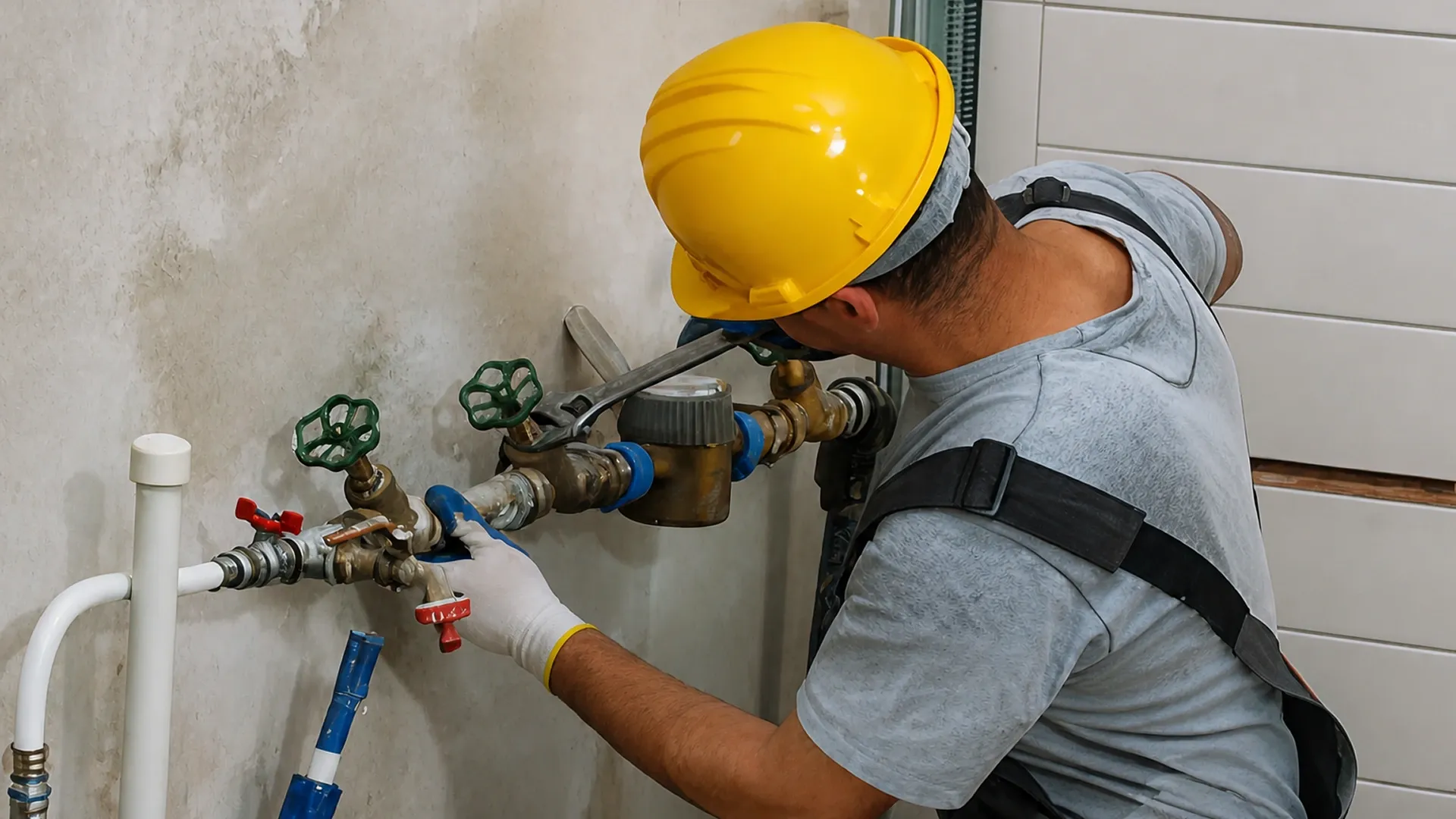
Florida Plumbing Contractor License: Requirements and Exam Guide
See what it takes to earn a Florida plumbing contractor license, from DBPR eligibility to exam day. License Fix prepares you to pass on the first try.

Adrian Coastal Roofing
You can sweat a joint, rough in a bathroom, and diagnose a failing water heater in your sleep. None of that matters to the state of Florida until you hold a Florida plumbing contractor license. Without one, you cannot legally pull permits, sign contracts as a plumbing contractor, or bid work above what an unlicensed handyman is allowed to perform. This guide breaks down what the DBPR expects, what the exams cover, and how License Fix gets candidates through the process without wasted study time.
A Florida plumbing contractor license is issued by the Department of Business and Professional Regulation (DBPR) and overseen by the Construction Industry Licensing Board (CILB). Florida offers two paths: a Certified Plumbing Contractor license, which lets you work anywhere in the state, and a Registered Plumbing Contractor license, which limits you to the jurisdiction that issued it. For plumbers who want long-term flexibility and the ability to take on work across county lines, the certified path is almost always the better investment.
A Florida plumbing contractor license is also what allows you to carry your own liability insurance, hire and train your own crew, and bid jobs directly instead of working under someone else's certificate of competency. For a lot of experienced plumbers, that shift from employee to license holder is the real turning point in building a business instead of just holding a job.
Florida Plumbing License Requirements
The Florida plumbing license requirements start with experience. Applicants must document four years of plumbing-related work, with at least one year in a supervisory or foreman capacity. A combination of relevant education and field experience can also satisfy this requirement, and Florida allows education credit to substitute for a portion of the experience window when it comes from a DBPR-recognized program.
Beyond experience, the DBPR reviews your credit history and requires a background check as part of the certified plumbing contractor application. Financial stability matters here because the state wants assurance that a licensed contractor can meet contractual and payroll obligations without cutting corners on a job. Applicants also need proof of general liability insurance before the license is activated, so it helps to have a quote in hand before you file.
One detail that trips up a lot of candidates researching Florida plumbing license requirements is timing. You do not have to fully satisfy the experience requirement before sitting for your exams. Once your application clears initial DBPR review, you can schedule and pass both required exams, then use a multi-year window to complete any remaining experience documentation before finalizing your license. That means an ambitious plumber can knock out the hardest part, the exams, while still building toward the full four years of qualifying work.
Fees vary depending on when in the biennial cycle you apply, so it is worth checking the current fee schedule on the DBPR site before submitting your application.
The Florida Plumbing Contractor Exam
Every applicant for a Certified Plumbing Contractor license has to pass two separate tests, and together they make up the Florida plumbing contractor exam most candidates dread and underestimate in equal measure.
The Business and Financial Management exam covers roughly 120 questions and tests your understanding of contract administration, financial statements, lien law, and general business practices for a licensed contracting company. This portion is administered by computer through Pearson VUE. The General Trade Knowledge exam is the plumbing-specific portion, delivered in person and made up of around 110 questions plus several isometric drawing problems that test your ability to read plans and specifications. Both sections require a minimum score of 70 percent, and Florida does not round scores in your favor.
The trade exam pulls heavily from the Florida Building Code plumbing provisions, backflow prevention, drainage and venting systems, and water supply design. Because the exam is open book, candidates often assume they can simply look up whatever they do not know. In practice, the Florida plumbing contractor exam moves fast, and flipping through an unmarked code book under time pressure is one of the most common reasons qualified plumbers fail on their first attempt.
License Fix built its plumbing course to solve exactly that problem. Every required book comes pre-tabbed, video lessons walk through the Florida Building Code plumbing chapters in the order they appear on the exam blueprint, and the isometric drawing questions get dedicated practice time most self-study candidates skip entirely. Practice questions are refreshed every quarter by Gold Alumni who recently sat for the same Florida plumbing contractor exam, so the material reflects what is actually being tested right now, not what was tested three years ago.
For a side-by-side look at how the Business and Finance exam works across every trade, read our guide on the Florida Contractor Exam: Business and Finance. If you are still weighing which specialty trade license fits your career plans, our article on Florida Contractor License County vs State explains how the certified and registered paths affect where you can legally work.
Frequently Asked Questions
How many years of experience do I need for a Florida plumbing contractor license?
The DBPR generally requires four years of plumbing-related experience, including at least one year in a supervisory or foreman role. Education from a DBPR-recognized program can offset part of that requirement.
Do I have to finish my experience requirement before taking the exam?
No. You can pass both the Business and Financial Management exam and the General Trade Knowledge exam before your experience is fully documented, then use a multi-year window to complete the remaining requirements.
Does Florida have plumbing license reciprocity with other states?
No. Florida does not currently have reciprocity agreements for plumbing licenses, so a license from another state does not transfer automatically. You still need to meet Florida's own requirements and pass its exams.
What score do I need to pass the Florida plumbing contractor exam?
You need at least 70 percent on both the Business and Financial Management exam and the General Trade Knowledge exam. Each section is scored separately, and both must be passed within the state's allowed testing window.
Can I get a Florida plumbing contractor license without a college degree?
Yes. Most plumbers qualify through field experience alone. A degree can offset part of the four-year experience requirement, but it is not required to apply for a Florida plumbing contractor license.
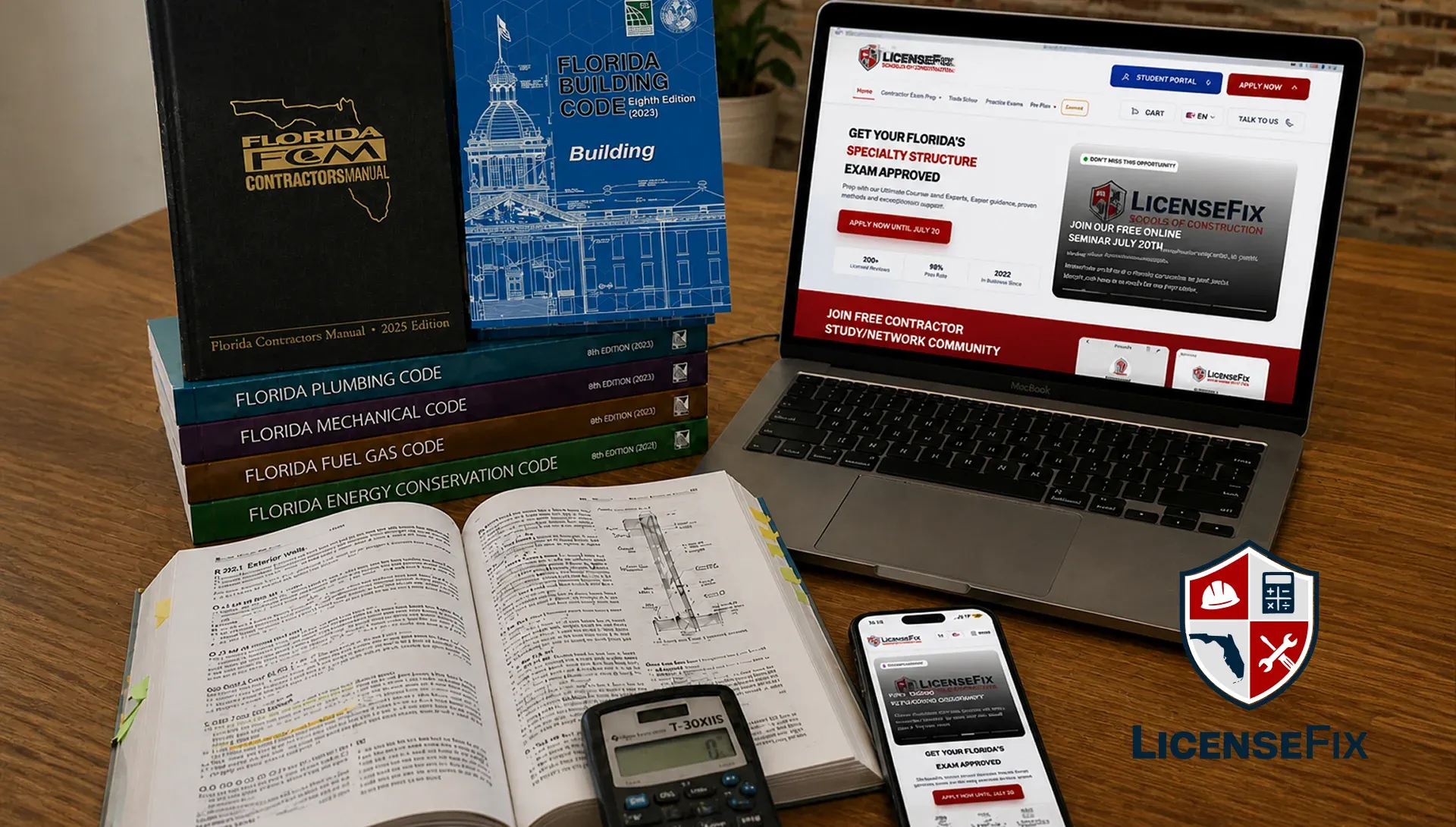
Get Your Florida Plumbing Contractor License with License Fix
A Florida plumbing contractor license opens the door to statewide work, bigger contracts, and the ability to run your business the way you actually want to run it. But the exam does not reward field experience alone, it rewards structured preparation. License Fix has guided more than 209 Florida contractors to a 91 percent pass rate by building courses around exactly what the DBPR tests, not what generic study guides assume.
Call License Fix School at (321) 333-2825 or visit our Plumbing Contractor course page to start preparing for your Florida plumbing contractor license today.

About Adrian Coastal Roofing
Adrian is the CEO of Coastal Roofing, a company specializing in roof installation in Florida, recognized for its quality, reliability, and excellence in residential and commercial projects. With years of experience in the construction industry and Florida roofing, Adrian has built his reputation by delivering durable solutions that withstand the state’s extreme weather. Under his leadership, Coastal Roofing has become a leader in roof installation in Florida, offering modern systems such as TPO, PVC, metal roofing, and other efficient solutions to reduce costs and extend the lifespan of roofs.